Home / Science / Hellish Exoplanet Found: Sulphur, Magma Oceans
Hellish Exoplanet Found: Sulphur, Magma Oceans
16 Mar
Summary
- A new exoplanet, L 98-59 d, has a sulphurous atmosphere.
- The planet features a semi-molten magma ocean with dissolved sulphur.
- This discovery expands understanding of planetary diversity beyond Earth.
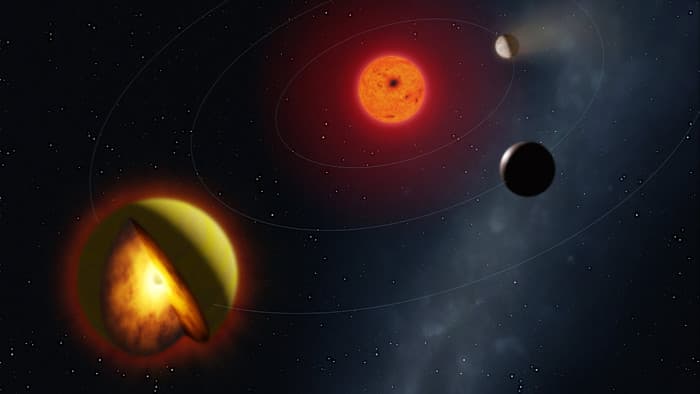
Scientists have identified a potential new class of exoplanet, designated L 98-59 d, which possesses a sulphurous atmosphere and oceans of magma. This discovery, detailed in Nature Astronomy, suggests that existing categories for small planets may be too simplistic, opening the door for further unexpected findings.
The exoplanet orbits a red star approximately 35 light-years from Earth and has an unusually low density for its size, about 1.6 times that of Earth. Analysis from the James Webb Space Telescope revealed significant amounts of sulphur-containing gases, such as hydrogen sulphide, in its atmosphere.
Computer simulations of L 98-59 d's history indicate its interior is primarily a semi-molten magma ocean with dissolved sulphur. This environment stands in contrast to previously theorized exoplanets, such as gas dwarfs or hycean worlds. Researchers suggest such findings expand the possibilities for alien chemistry and life.
While L 98-59 d would not be habitable by Earth life, its unique composition sparks curiosity about other potential exoplanetary environments. The research team noted that deducing planetary nature is challenging, akin to identifying a distant moth by light fluctuations.