
Home / Science / Gravity's Constant: A Decade of Disappointment?
Gravity's Constant: A Decade of Disappointment?
7 May
Summary
- Scientists struggled for a decade to accurately measure Newton's gravitational constant, Big G.
- The latest experiment's results conflicted with previous findings, causing scientific frustration.
- Gravity is a weak force, making precise laboratory measurements exceptionally challenging.
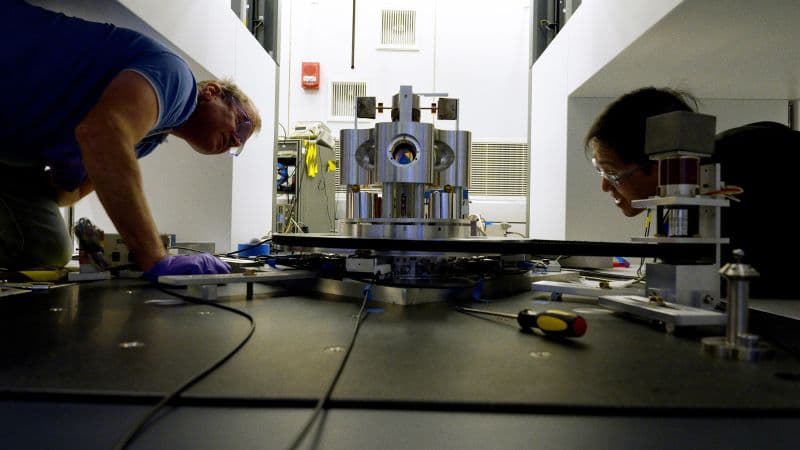
For over a decade, scientists have been engaged in a challenging quest to precisely measure Newton's gravitational constant, known as Big G. This fundamental constant dictates the strength of gravitational attraction throughout the universe. The most recent extensive effort, initiated in 2016, has concluded without achieving a definitive or consistent value, adding to a history of measurement discrepancies.
This persistent difficulty stems from gravity's nature as a relatively weak force compared to others like electromagnetism. In laboratory settings, the small masses used generate only minor gravitational forces, making them hard to isolate and measure accurately. Furthermore, every object exerts gravitational pull, complicating efforts to attribute measured forces solely to the intended experimental masses.
The latest experiment sought to replicate a previous study using a sensitive torsion balance. However, the results, revealed in July 2024, were 0.0235% lower than the benchmark experiment and at odds with the recommended value from CODATA. Despite the frustrating outcome, the scientist involved views the rigorous process of precise measurement, even when yielding inconclusive results, as a valuable exposure of unknowns in physics.
