


Home / Science / Gobi Desert: A Fossil Paradise Unearthed
Gobi Desert: A Fossil Paradise Unearthed
15 Apr
Summary
- Museum exhibition honors Gobi Desert fossil discoveries.
- Roy Chapman Andrews discovered first dinosaur eggs.
- Mark Norell affirmed the link between dinosaurs and birds.
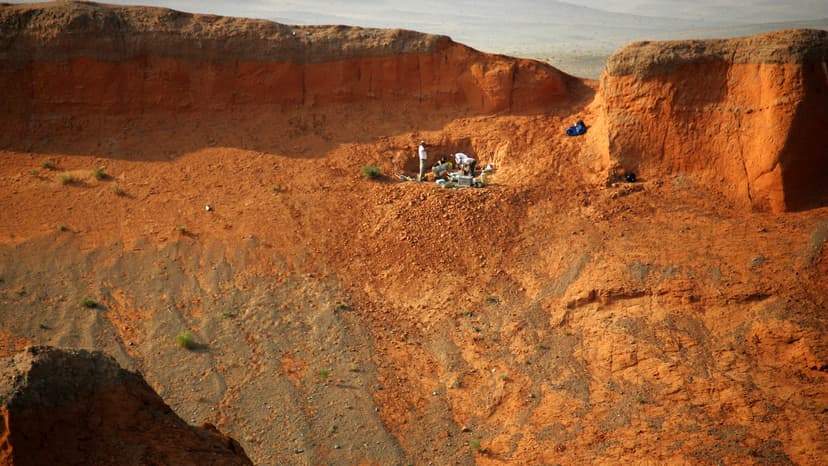
The American Museum of Natural History is presenting "Fossils of the Flaming Cliffs," an exhibition dedicated to its groundbreaking fossil discoveries in Mongolia's Gobi Desert. This remote region has yielded significant paleontological finds, including the first scientifically linked dinosaur eggs discovered by Roy Chapman Andrews in 1923. His expeditions also uncovered fossils of Velociraptors and Protoceratops.
Mark Norell, a former curator at the museum, was instrumental in affirming the connection between dinosaurs and birds. His and Michael Novacek's expeditions since 1990 have continued the legacy of discovery, notably at the rich sandstone formation of Ukhaa Tolgod. The exhibition features 12 key discoveries and 27 photographs documenting decades of exploration.
These expeditions have faced considerable logistical challenges, evolving from arduous journeys by camel and early automobiles to the use of rugged military trucks. The Gobi Desert remains a vital site, with ongoing research aiming to understand the transition from the age of dinosaurs to the age of mammals.
