Home / Science / Europe's Mega-Collider Faces Funding Fears
Europe's Mega-Collider Faces Funding Fears
26 Oct
Summary
- Future Circular Collider successor to LHC needs €16bn funding.
- Rising public spending pressures threaten European mega-projects.
- Germany, a key funder, has expressed financial doubts.
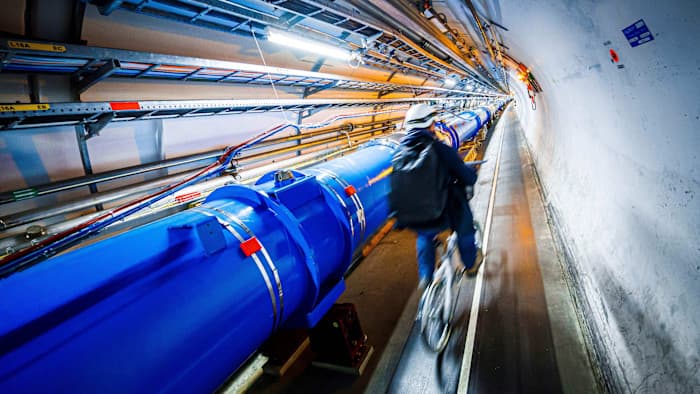
The Future Circular Collider (FCC), a planned successor to the Large Hadron Collider (LHC), faces funding uncertainty amidst Europe's increasing public spending pressures. Cern's director-general, Mark Thomson, is advocating for the €16bn project, emphasizing its potential for industrial growth and its importance for inspiring young scientists. The continent is currently managing challenges including aging populations and increased military spending following Russia's invasion of Ukraine.
Germany, a major financial contributor to Cern, has previously voiced concerns regarding the FCC's financial viability. Thomson acknowledges the challenges but believes a path forward exists, focusing on how member states and industries can directly benefit from technological advancements. Cern's governing council endorsed the FCC as its next major undertaking, aiming to build upon the groundbreaking research of the LHC, including the 2012 discovery of the Higgs boson.
The FCC, envisioned to be significantly larger than the LHC, would collide electrons and antiparticles to explore phenomena like dark matter. Thomson is actively seeking support across European capitals, with a decision anticipated around 2028. The project could commence operations in the late 2040s, coinciding with the LHC's planned phase-out. Cern's history, including the creation of the World Wide Web in 1989 during a post-war economic downturn, highlights the long-term technological and scientific benefits of such ambitious endeavors.


