Home / Science / Scientists Restore Function to Frozen Brain Tissue
Scientists Restore Function to Frozen Brain Tissue
13 Mar
Summary
- Vitrification technique prevents ice crystals in frozen brain tissue.
- Restored mouse hippocampus tissue showed electrical activity.
- Method preserves neuronal and synaptic membranes for potential use.
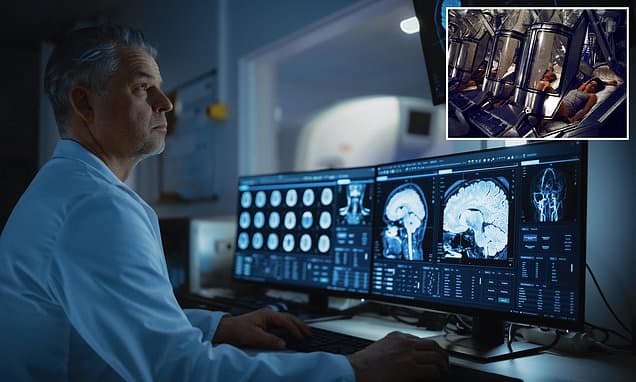
A significant advancement has been made in cryopreservation, with scientists successfully restoring functional activity in frozen brain tissue.
The primary challenge in freezing brains has been the formation of damaging ice crystals. Researchers at the University of Erlangen-Nuremberg in Germany employed a vitrification technique to cool tissue rapidly. This process prevents ice formation, transforming the internal liquids into a glass-like state and preserving cellular structure.
Thin slices of mouse hippocampus were cooled to -196 degrees Celsius using liquid nitrogen and stored for up to a week. Upon rewarming, microscopic analysis revealed that neuronal and synaptic membranes remained intact. Crucially, the mitochondria demonstrated normal function, and electrical activity was recorded from the neurons.
The study observed evidence of long-term potentiation (LTP), a cellular process fundamental to learning and memory. While the observations were limited to a few hours on tissue sections, this breakthrough suggests that complex functional circuitry can survive cryopreservation. The research opens new possibilities for protecting brain tissue after injury or disease, and potentially for organ storage.