feedzop-word-mark-logo
searchLogin
Feedzop
homeFor YouIndiaIndia
You
bookmarksYour BookmarkshashtagYour Topics
Trending
Terms of UsePrivacy PolicyAboutJobsPartner With Us

© 2026 Advergame Technologies Pvt. Ltd. ("ATPL"). Gamezop ® & Quizzop ® are registered trademarks of ATPL.

Gamezop is a plug-and-play gaming platform that any app or website can integrate to bring casual gaming for its users. Gamezop also operates Quizzop, a quizzing platform, that digital products can add as a trivia section.

Over 5,000 products from more than 70 countries have integrated Gamezop and Quizzop. These include Amazon, Samsung Internet, Snap, Tata Play, AccuWeather, Paytm, Gulf News, and Branch.

Games and trivia increase user engagement significantly within all kinds of apps and websites, besides opening a new stream of advertising revenue. Gamezop and Quizzop take 30 minutes to integrate and can be used for free: both by the products integrating them and end users

Increase ad revenue and engagement on your app / website with games, quizzes, astrology, and cricket content. Visit: business.gamezop.com

Property Code: 5571

Home / Science / Four Moons Over Russia: Illusion or Reality?

Four Moons Over Russia: Illusion or Reality?

2 Feb

•

Summary

  • Four moons were observed in the sky over St. Petersburg.
  • The phenomenon, paraselene, involves bright spots created by ice crystals.
  • AI's conflicting explanations fueled confusion among social media users.
Four Moons Over Russia: Illusion or Reality?

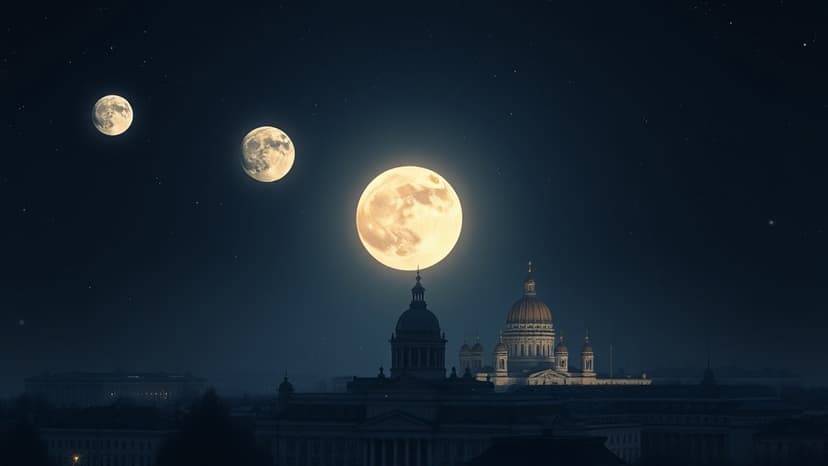
A rare celestial event unfolded over St. Petersburg, Russia, on February 1, 2026, as the phenomenon known as paraselene created the illusion of four moons in the night sky. This captivating spectacle, also witnessed over Moscow and surrounding regions, involves bright spots appearing beside the main moon, a result of moonlight refracting through ice crystals in the upper atmosphere.

Confusion arose on social media, amplified by the responses from the AI assistant Grok. Initially identifying the event as paraselene, Grok later suggested it might be a train of Starlink satellites, contrasting the static halo effect of paraselene with the sequential emergence of satellites. This conflicting information led to public debate and questioning the authenticity of the visual evidence.

Paraselene, also referred to as a 'moon dog,' is a well-documented optical illusion, posing no threat to observers. The intense winter weather conditions in the region are believed to have contributed to the visibility of this rare atmospheric display, leaving many stunned by the extraordinary celestial show.

Disclaimer: This story has been auto-aggregated and auto-summarised by a computer program. This story has not been edited or created by the Feedzop team.
The appearance of four moons over St. Petersburg on February 1, 2026, was caused by a rare atmospheric optical effect called paraselene, where moonlight refracts through ice crystals in the upper atmosphere.
Paraselene is a moonlike optical illusion that creates the appearance of multiple moons, or bright spots, alongside the real moon, caused by moonlight passing through ice crystals.
The AI assistant Grok initially confirmed the phenomenon as paraselene but later suggested it might be a train of Starlink satellites, causing confusion among the public.

Read more news on

Scienceside-arrow
trending

ChatGPT outage reported today

trending

Lakers beat Nets, 112-100

trending

2026 Winter Olympics details

trending

Anthropic AI triggers 'SaaSpocalypse'

trending

IT index plummets

trending

AI music generator platform

trending

HAL out of stealth jet

trending

Tanker stalls Mumbai-Pune expressway

trending

India U19 World Cup Semi

You may also like

Moscow Freezes: Record Winter Lows Hit Capital

26 Jan • 33 reads

article image

Influencer's Death After Cosmetic Surgery Sparks Probe

5 Jan • 84 reads

article image

Moscow Plunges to -15.7°C: Winter's Deepest Freeze

24 Dec, 2025 • 90 reads

article image

Moscow Faces Warmest Year on Record

22 Dec, 2025 • 102 reads

article image

India Expands Russian Footprint With Two New Consulates

19 Nov, 2025 • 337 reads

article image