
Home / Science / Ancient Fossil Reveals Arthropod Land Conquest
Ancient Fossil Reveals Arthropod Land Conquest
6 May
Summary
- New fossil species Waukartus muscularis shows ancient myriapods adapted to land.
- Fossils found in Wisconsin date back to the early Silurian period.
- Creatures had streamlined legs, suggesting pre-land adaptation.
- Waukartus muscularis possessed flexible bodies with 11 segments.
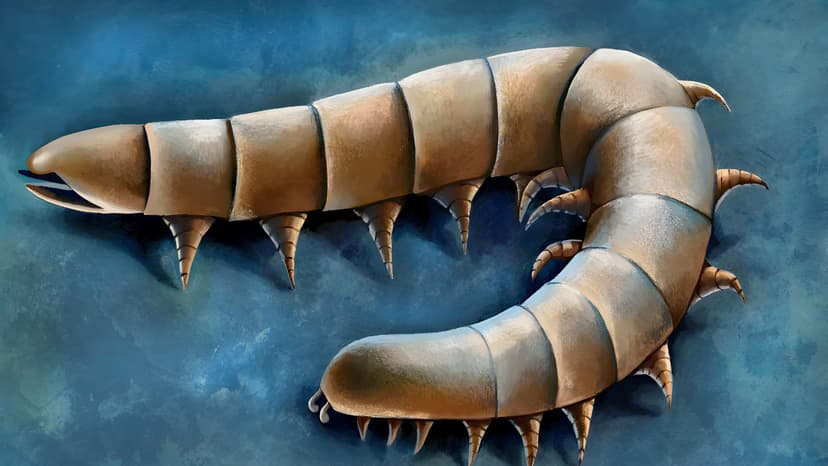
A recently unearthed fossil species, Waukartus muscularis, sheds light on a pivotal moment in evolutionary history: the transition of arthropods from sea to land. This discovery, detailed in Proceedings of the Royal Society B, reveals that creatures resembling modern myriapods possessed streamlined, segmented legs well before their ancestors ventured onto dry land.
The fossils were discovered in a stone quarry in Waukesha, Wisconsin, an area that was near the Equator and a shallow coastline during the early Silurian period, around 437 million years ago. The unique preservation conditions in this ancient seabed allowed for remarkable detail, including traces of muscles and internal structures.
Waukartus muscularis had an 11-segment body and specialized appendages, indicating a significant degree of adaptation for terrestrial life. The simplicity of its limbs, lacking gill-like structures seen in contemporaries like trilobites, suggests a deliberate streamlining of features for land existence. This finding supports the idea that myriapods were well-prepared for their terrestrial journey.
