Home / Science / Molecular Catapult Speeds Solar Charge Transfer
Molecular Catapult Speeds Solar Charge Transfer
6 Mar
Summary
- Electric charge separated in just 18 femtoseconds.
- Molecular vibrations act as a catapult, driving charge.
- New design principle uses molecular vibrations for efficiency.
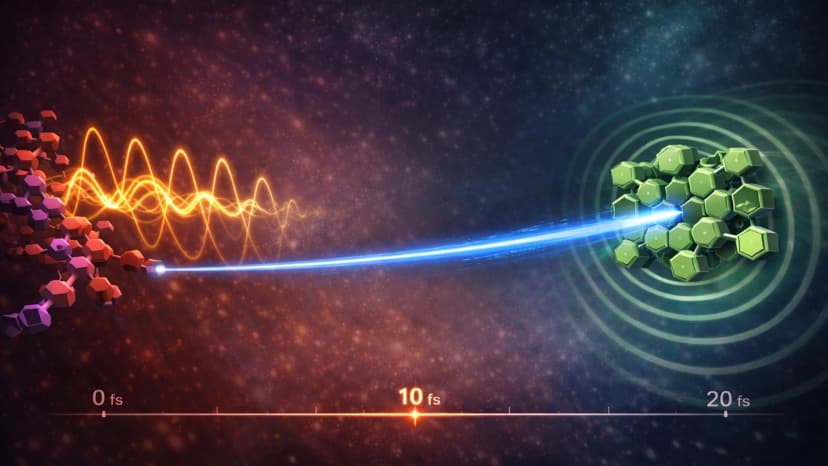
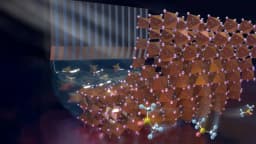
Scientists at the University of Cambridge have witnessed electric charge separating within a single molecular vibration, a process occurring in an astonishing 18 femtoseconds. This ultrafast charge transfer was observed during laboratory experiments, pushing the boundaries of our understanding of light-matter interactions.
These findings, published on March 5, 2026, challenge conventional theories in solar energy science. Previously, it was believed that efficient charge transfer necessitated large energy differences and strong electronic coupling, conditions that could lead to energy loss. The research demonstrated that molecular vibrations can actively drive this charge separation, acting like a "molecular catapult."
This new insight suggests a paradigm shift in designing light-harvesting technologies. Instead of suppressing molecular motion, researchers can now leverage specific vibrations to enhance charge separation speed and efficiency. This principle is crucial for devices like organic solar cells and photocatalytic systems aiming to produce clean energy.
The international research collaboration involved scientists from various institutions, highlighting a global effort to advance solar energy conversion. The implications extend to natural processes like photosynthesis, offering new avenues for technological innovation.