feedzop-word-mark-logo
searchLogin
Feedzop
homeFor YouIndiaIndia
You
bookmarksYour BookmarkshashtagYour Topics
Trending
Terms of UsePrivacy PolicyAboutJobsPartner With Us

© 2026 Advergame Technologies Pvt. Ltd. ("ATPL"). Gamezop ® & Quizzop ® are registered trademarks of ATPL.

Gamezop is a plug-and-play gaming platform that any app or website can integrate to bring casual gaming for its users. Gamezop also operates Quizzop, a quizzing platform, that digital products can add as a trivia section.

Over 5,000 products from more than 70 countries have integrated Gamezop and Quizzop. These include Amazon, Samsung Internet, Snap, Tata Play, AccuWeather, Paytm, Gulf News, and Branch.

Games and trivia increase user engagement significantly within all kinds of apps and websites, besides opening a new stream of advertising revenue. Gamezop and Quizzop take 30 minutes to integrate and can be used for free: both by the products integrating them and end users

Increase ad revenue and engagement on your app / website with games, quizzes, astrology, and cricket content. Visit: business.gamezop.com

Property Code: 5571

Home / Science / Fake Science Epidemic Threatens Integrity of Research Worldwide

Fake Science Epidemic Threatens Integrity of Research Worldwide

10 Nov, 2025

•

Summary

  • Surge in fabricated research, with over 100,000 fake papers per year in biomedicine alone
  • Dishonest authors and institutions seeking to inflate reputations, along with profit-driven publishers
  • Collateral damage includes unreliable scientific analyses, experiments, and clinical trials
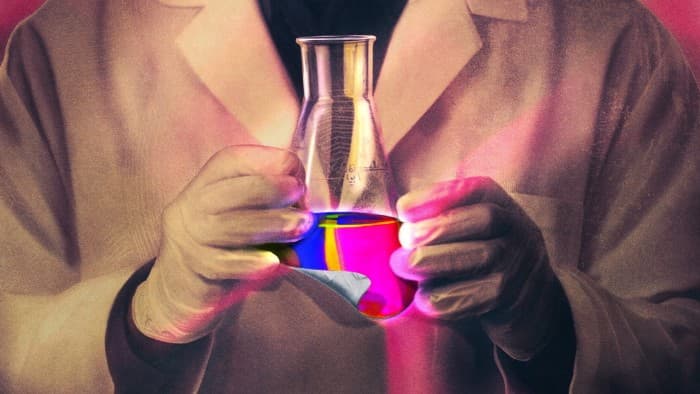
Fake Science Epidemic Threatens Integrity of Research Worldwide

As of November 10th, 2025, a concerning epidemic of fake science publications has been plaguing the academic world. According to a professor of medical psychology at the Otto von Guericke University of Magdeburg, the number of fabricated research papers has now exceeded 100,000 per year in the biomedical field alone.

This surge in fraudulent studies is being driven by a combination of factors. On one side, there are dishonest authors and institutions seeking to inflate their reputations through high publication counts and citations. On the other, profit-driven publishers are charging exorbitant fees to process these papers, creating an incentive for industrial-scale production of fake science.

trending

Vodafone Idea turnaround plan

trending

Dixon Tech share price rises

trending

South Indian Bank shares tank

trending

Gold, silver prices jump

trending

Sabalenka, Rybakina Australian Open Final

trending

RCB wins WPL match

trending

Realme P4 Power launched

trending

Swiggy share price declines

trending

Quartararo leaving Yamaha for Honda

The collateral damage of this crisis is far-reaching. Scientific analyses, experiments, and clinical trials are failing more often, as technical knowledge becomes less precise or even misleading. This can lead to harm for patients, environmental damage, and slower economic development. The deluge of low-quality papers is also overwhelming the peer review system, causing sloppy oversight.

Experts warn that if nothing is done, the manipulation, disinformation, and fakery could eventually lead to a collapse of trust in science, a critical pillar of modern knowledge-based economies and societies. A global plan for reforming the science publishing industry is now being proposed, including measures to end the "publish or perish" culture and establish independent fraud detection mechanisms.

Disclaimer: This story has been auto-aggregated and auto-summarised by a computer program. This story has not been edited or created by the Feedzop team.
Fake scientific papers can lead to harm for patients and damage the healthcare system, as unreliable data and analyses can result in ineffective or even harmful therapies being developed and implemented.
The "publish or perish" culture at many universities and research institutions, which treats publication counts and citation metrics as surrogates of excellence, is creating a strong incentive for researchers to produce fake or low-quality papers.
The Stockholm Declaration, published by the Open Science journal of the Royal Society of London, is calling for a global alliance of academies, scientific organizations, and governments to implement 34 measures to reform the science publishing industry, including ending the "publish or perish" culture and establishing independent fraud detection mechanisms.

Read more news on

Scienceside-arrow

You may also like

Takeaway Salt Shock: Double Daily Limit Found!

22 Jan • 2 reads

article image

Harvard Email Found 6 Years Late: Musician's Shocking Discovery

18 Dec, 2025 • 259 reads

article image

Student Finds Freedom and Affordability in German Med School

8 Dec, 2025 • 195 reads

article image

Night Light Harms Heart Health, Harvard Study Finds

19 Nov, 2025 • 365 reads

article image

Cleaning Chemicals Linked to Rapid Lung Function Decline in Women

15 Nov, 2025 • 232 reads

article image