feedzop-word-mark-logo
searchLogin
Feedzop
homeFor YouIndiaIndia
You
bookmarksYour BookmarkshashtagYour Topics
Trending
trending

Dow Jones awaits Fed decision

trending

ITR refund delays explained

trending

Court reverses Byju order

trending

Australia bans social media under 16

trending

India Post reengineering underway

trending

Union Bank tackles cyber risks

trending

Mexico tariff hits car exports

trending

Sabarimala gold heist case

trending

Ayushman cards issued to women

Terms of UsePrivacy PolicyAboutJobsPartner With Us

© 2025 Advergame Technologies Pvt. Ltd. ("ATPL"). Gamezop ® & Quizzop ® are registered trademarks of ATPL.

Gamezop is a plug-and-play gaming platform that any app or website can integrate to bring casual gaming for its users. Gamezop also operates Quizzop, a quizzing platform, that digital products can add as a trivia section.

Over 5,000 products from more than 70 countries have integrated Gamezop and Quizzop. These include Amazon, Samsung Internet, Snap, Tata Play, AccuWeather, Paytm, Gulf News, and Branch.

Games and trivia increase user engagement significantly within all kinds of apps and websites, besides opening a new stream of advertising revenue. Gamezop and Quizzop take 30 minutes to integrate and can be used for free: both by the products integrating them and end users

Increase ad revenue and engagement on your app / website with games, quizzes, astrology, and cricket content. Visit: business.gamezop.com

Property Code: 5571

Home / Science / Rare Bloom Resurfaces After 100 Years

Rare Bloom Resurfaces After 100 Years

28 Nov

•

Summary

  • A plant thought extinct for over a century has been rediscovered.
  • The Exacum loheri relies on fungi for nutrients, not chlorophyll.
  • Its rediscovery strengthens the case for protecting the Masungi Georeserve.
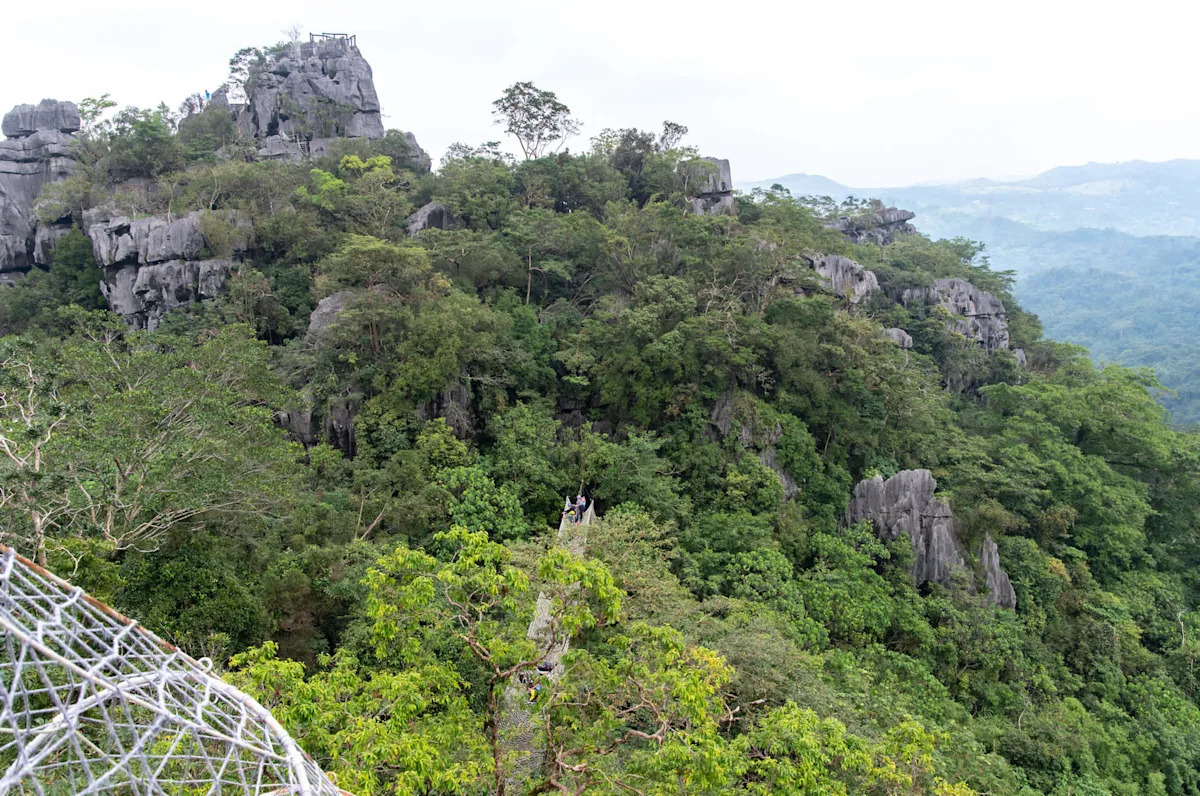
Rare Bloom Resurfaces After 100 Years

Scientists have rediscovered a rare species of flora, Exacum loheri, in the Philippines, a plant that had not been seen for over a century. This botanical marvel, first documented in 1895, was recently photographed by researchers in the Masungi Georeserve. Its unique characteristic as a mycoheterotroph, deriving nutrients from fungi instead of producing its own chlorophyll, makes it a subject of significant scientific interest.

The reappearance of Exacum loheri underscores the exceptional biodiversity housed within the 2,700-hectare Masungi Georeserve. This discovery provides compelling evidence for stakeholders to enhance protection measures against potential threats such as raw material extraction and land speculation, even as conservationists weigh the development of renewable energy projects outside sensitive areas.

This rediscovery echoes similar botanical triumphs, including Amalophyllon miraculum in Ecuador and Millettia sacleuxii in Tanzania, offering a beacon of hope for countless endangered species. The persistence of Exacum loheri suggests that even the most vulnerable flora can adapt and survive, fostering optimism for global biodiversity conservation efforts.


Disclaimer: This story has been auto-aggregated and auto-summarised by a computer program. This story has not been edited or created by the Feedzop team.
The Exacum loheri, a rare species of flora thought to be extinct, was rediscovered in the Philippines.
The Exacum loheri was found in the Masungi Georeserve in the Philippines.
The Exacum loheri is unique because it is a mycoheterotroph, meaning it relies on fungi for nutrients instead of producing its own chlorophyll.

Read more news on

Scienceside-arrowPhilippinesside-arrow

You may also like

Eni Strikes Gold: Massive Gas Find Off Indonesia

1 day ago • 5 reads

article image

Trapped in Scam Hell: Women Forced to Deceive World

25 Nov • 102 reads

article image

Furniture Firms Linked to Orang-utan Habitat Destruction in Borneo

31 Oct • 130 reads

article image

Tropical Storm Fengshen Kills 7, Displaces Thousands in Philippines

20 Oct • 193 reads

article image

Indonesian Volcano Erupts, Forcing Highest Alert and Evacuations

15 Oct • 141 reads

article image