

Home / Science / Europe's Highest Hut: A Test of Survival
Europe's Highest Hut: A Test of Survival
29 Mar
Summary
- The Margherita Hut is Europe's highest building, perched at 4,554 meters.
- Nearly all unacclimatized visitors experience brain swelling at the hut.
- The hut, built in 1893, serves as a hotel and high-altitude research lab.
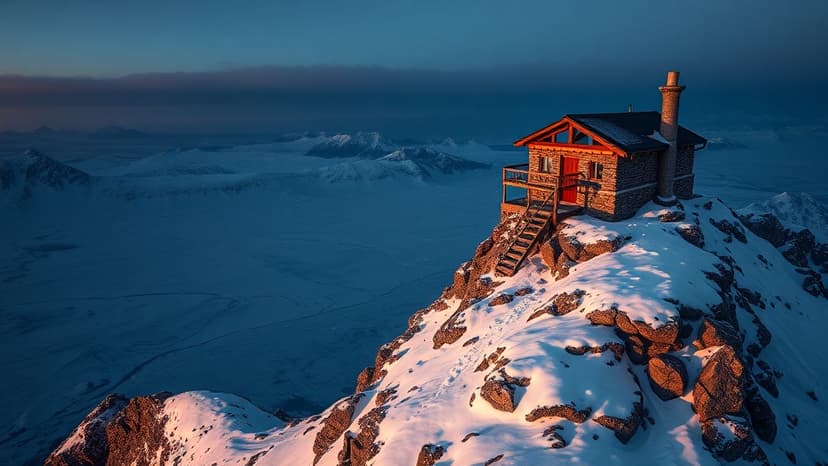
Perched at 4,554 meters, the Margherita Hut stands as Europe's highest building and a symbol of human resilience. Its location on Punta Gnifetti, accessible via the treacherous Monte Rosa Glacier, demands technical mountaineering skills to navigate crevasses and extreme weather.
The hut, inaugurated in 1893 by Queen Margherita of Savoy, was meticulously transported piece by piece to its summit location. It has since become a vital research center, recognized as the world's highest permanent laboratory for studying human survival in 'subacute hypoxia' conditions.
Research conducted at this extreme altitude reveals significant physiological impacts. Studies indicate that 100% of visitors who ascend rapidly without acclimatization experience measurable brain swelling. Furthermore, over 60% of mountaineers staying at the hut develop gastrointestinal lesions due to low oxygen levels. Sleep disturbances, including periodic breathing where individuals momentarily stop breathing, are also documented.
