Home / Science / Elephant Whiskers: Nature's High-Tech Touch Sensors
Elephant Whiskers: Nature's High-Tech Touch Sensors
13 Feb
Summary
- Elephant trunk whiskers are blade-like with porous structures for shock absorption.
- Whiskers feature a rigid base transitioning to a soft tip for amplified touch.
- Elephant whiskers do not grow back, unlike those of most mammals.
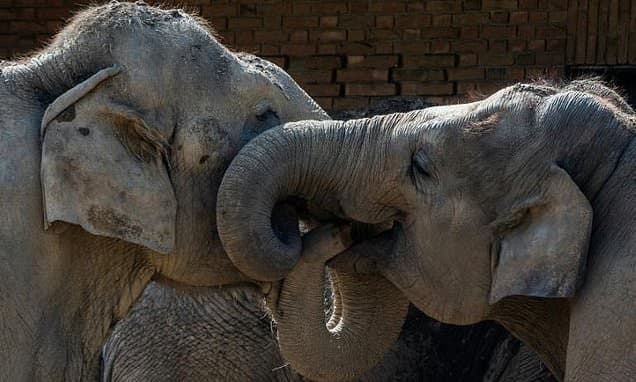
Elephant trunks, capable of immense strength and delicate precision, owe much of their dexterity to specialized whiskers covering their surface. New research reveals these approximately 1,000 trunk bristles are not round and stiff as expected, but rather possess a unique, porous, blade-like geometry akin to sheep horns. This structure not only absorbs shock but also contributes to an amplified sense of touch.
The most surprising finding is the whisker's gradiated structure, transitioning from a rigid base to an exceptionally soft tip. This design is crucial for elephants to differentiate objects while foraging, a primary activity for the animals. Unlike most mammals, elephant whiskers do not regenerate, making their preservation a key evolutionary advantage.
This research has implications beyond understanding elephants, offering insights for robotics and biomimicry. The stiff base-to-soft tip gradient found in elephant whiskers is also present in human biological structures like rotator cuffs and ligaments, suggesting potential applications in improved repair techniques. Behavioral ecologist Caitlin O'Connell-Rodwell noted the findings affirm the trunk's sensitivity, with potential applications for both foraging agility and communication.