feedzop-word-mark-logo
searchLogin
Feedzop
homeFor YouIndiaIndia
You
bookmarksYour BookmarkshashtagYour Topics
Trending
Terms of UsePrivacy PolicyAboutJobsPartner With Us

© 2026 Advergame Technologies Pvt. Ltd. ("ATPL"). Gamezop ® & Quizzop ® are registered trademarks of ATPL.

Gamezop is a plug-and-play gaming platform that any app or website can integrate to bring casual gaming for its users. Gamezop also operates Quizzop, a quizzing platform, that digital products can add as a trivia section.

Over 5,000 products from more than 70 countries have integrated Gamezop and Quizzop. These include Amazon, Samsung Internet, Snap, Tata Play, AccuWeather, Paytm, Gulf News, and Branch.

Games and trivia increase user engagement significantly within all kinds of apps and websites, besides opening a new stream of advertising revenue. Gamezop and Quizzop take 30 minutes to integrate and can be used for free: both by the products integrating them and end users

Increase ad revenue and engagement on your app / website with games, quizzes, astrology, and cricket content. Visit: business.gamezop.com

Property Code: 5571

Home / Science / Edison's Light Bulb May Have Created Graphene

Edison's Light Bulb May Have Created Graphene

25 Jan

•

Summary

  • Thomas Edison's 1879 light bulb experiments might have produced graphene.
  • Researchers recreated Edison's process yielding turbostratic graphene.
  • Early 20th-century technology may hold undiscovered material science secrets.
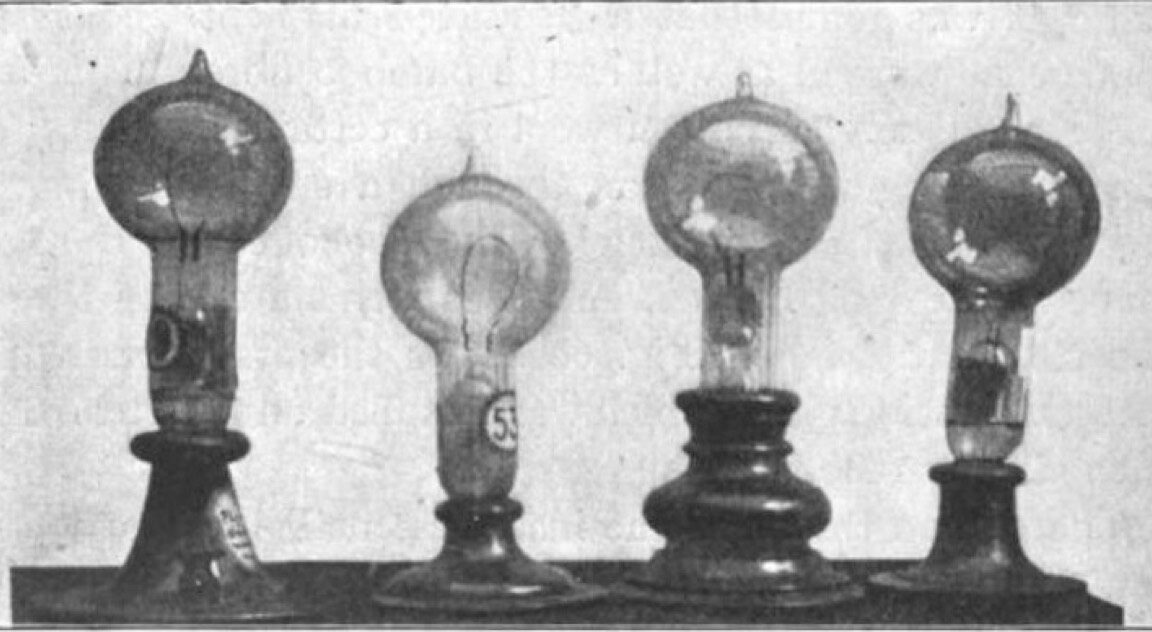
Edison's Light Bulb May Have Created Graphene

Thomas Edison's pioneering work on incandescent light bulbs in 1879 may have unintentionally yielded graphene, a revolutionary material composed of a single layer of carbon atoms. This discovery comes from a recent study published in ACS Nano, where scientists explored historical experiments with a modern scientific lens.

Researchers recreated Edison's process, heating carbon-based filaments to extreme temperatures between 2000 to 3000 degrees C. Using artisan bamboo filaments in replica Edison-style light bulbs powered by a 110-volt source, they observed a "lustrous silver" change in the carbon filament. Subsequent analysis revealed parts of the filament had transformed into turbostratic graphene.

While definitive proof is elusive, as Edison lacked the means to detect graphene, the findings underscore the potential for historical technologies to hold undiscovered scientific insights. The study suggests that revisiting other early technologies, such as vacuum tubes or arc lamps, could reveal accidental material creations previously overlooked.


Disclaimer: This story has been auto-aggregated and auto-summarised by a computer program. This story has not been edited or created by the Feedzop team.
A new study suggests that Thomas Edison's experiments in 1879 with incandescent light bulbs may have unintentionally produced graphene, though he lacked the means to detect it at the time.
Researchers recreated Edison's process using replica light bulbs and carbon filaments, heating them to extreme temperatures. Analysis revealed that parts of the filament had transformed into turbostratic graphene.
Graphene is the thinnest known material, consisting of a single layer of carbon atoms in a hexagonal lattice, possessing unique properties with promising applications in various technologies.

Read more news on

Scienceside-arrow

You may also like

Future Phones: Solid-State, Nuclear, and Credit Card Thin!

16 Jan • 37 reads

article image

Qualcomm Eyes Samsung for Cutting-Edge Chip Production

7 Jan • 99 reads

article image
trending

Earthquake strikes western Turkiye

trending

Srinagar flights cancelled due weather

trending

Infosys to hire graduates

trending

Nipah virus outbreak in Bengal

trending

Amsterdam cruise terminal may close

trending

Google Photos introduces Me Meme

trending

Push private sector R&D

trending

Mbappé leads Real Madrid in La Liga

trending

Hamilton excited for Ferrari beginnings

China Unveils Secret AI Chip Machine Prototype

18 Dec, 2025 • 138 reads

article image

Copper Climbs as Tight Market Fears Resurface

15 Dec, 2025 • 126 reads

article image

Dangerous Toys: Nuclear Labs & Toxic Bubbles

15 Dec, 2025 • 176 reads

article image