

Home / Science / Space Traffic Jam: Collision Risk Soars
Space Traffic Jam: Collision Risk Soars
31 Mar
Summary
- Over 30,000 objects now orbit Earth, with numbers rapidly increasing.
- Collisions pose a risk of creating a debris layer, trapping humans on Earth.
- Orbital traffic management relies on constant cooperation and satellite maneuvering.
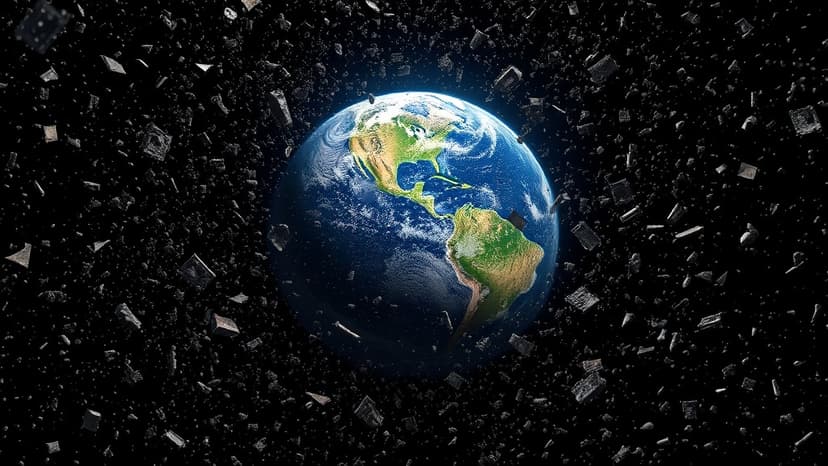
The space around Earth is rapidly becoming crowded, with over 30,000 human-made objects currently in orbit. Projections suggest this number could exceed 60,000 active satellites by the end of this decade, transforming space into a busy network of communication, navigation, and observation technology.
This surge in orbital activity has heightened concerns about collision risks. A 2009 incident, where a US satellite collided with a defunct Russian military satellite, generated tens of thousands of high-velocity fragments. Experts warn of a potential domino effect, where cascading collisions could create an impenetrable debris field, making space launches prohibitively dangerous and potentially trapping humanity on Earth.
Managing this escalating orbital traffic relies heavily on constant cooperation. Satellite operators routinely maneuver their craft to avoid potential collisions. However, this system is considered fragile, as a lapse in coordination could lead to rapid deterioration. Efforts are underway to develop methods for deorbiting large defunct satellites, employing technologies like nets, robotic arms, and high-powered lasers to mitigate the growing debris problem.

