feedzop-word-mark-logo
searchLogin
Feedzop
homeFor YouIndiaIndia
You
bookmarksYour BookmarkshashtagYour Topics
Trending
Terms of UsePrivacy PolicyAboutJobsPartner With Us

© 2026 Advergame Technologies Pvt. Ltd. ("ATPL"). Gamezop ® & Quizzop ® are registered trademarks of ATPL.

Gamezop is a plug-and-play gaming platform that any app or website can integrate to bring casual gaming for its users. Gamezop also operates Quizzop, a quizzing platform, that digital products can add as a trivia section.

Over 5,000 products from more than 70 countries have integrated Gamezop and Quizzop. These include Amazon, Samsung Internet, Snap, Tata Play, AccuWeather, Paytm, Gulf News, and Branch.

Games and trivia increase user engagement significantly within all kinds of apps and websites, besides opening a new stream of advertising revenue. Gamezop and Quizzop take 30 minutes to integrate and can be used for free: both by the products integrating them and end users

Increase ad revenue and engagement on your app / website with games, quizzes, astrology, and cricket content. Visit: business.gamezop.com

Property Code: 5571

Home / Science / Early Universe Grew Up Faster Than Thought

Early Universe Grew Up Faster Than Thought

31 Jan

•

Summary

  • Galaxy cluster observed formed one billion years after Big Bang.
  • Structure shows mature galaxy cluster signatures early on.
  • Findings challenge current cosmological models of structure growth.
Early Universe Grew Up Faster Than Thought

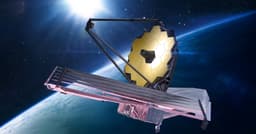
Observations from NASA's James Webb Space Telescope and Chandra X-ray Observatory suggest the universe developed much more rapidly than previously understood. Scientists have identified a nascent galaxy cluster, composed of at least 66 potential galaxies, that formed approximately one billion years after the Big Bang. This structure, dating to when the universe was only about 7% of its current age, displayed the hallmarks of a mature galaxy cluster.

This discovery challenges prevailing cosmological models, which posited that the formation of such massive structures necessitates a longer period. The early universe was not thought to possess sufficient density for a galaxy cluster of this magnitude to coalesce so soon after its inception. The protocluster's observed characteristics, including a halo of superheated gas and concentrated X-ray emissions, mirror those of fully formed galaxy clusters, pushing the timeline for cosmic structure development much earlier.

trending

Al Kholood vs Al Nassr

trending

Lakers vs Wizards odds

trending

Ruturaj Gaikwad celebrates birthday

trending

Maghi Purnima bathing festival

trending

Benzema refuses to play

trending

Giants face Mumbai Indians

trending

realme P4 Power 5G launched

trending

TNTET 2025 result announced

trending

Gold silver prices today

These findings, alongside other recent discoveries by the James Webb Space Telescope regarding luminous early galaxies and supermassive black holes, indicate that current understandings of the universe may be incomplete. The combined power of the Webb and Chandra observatories offers unprecedented insights into the early cosmos, supporting the notion of a surprisingly swift evolutionary start.

Disclaimer: This story has been auto-aggregated and auto-summarised by a computer program. This story has not been edited or created by the Feedzop team.
They provided evidence that the universe matured much faster than previously understood, with a galaxy cluster forming unusually early.
The emerging galaxy cluster formed approximately one billion years after the Big Bang, when the universe was about 7% of its current age.
The observations suggest that large galaxy clusters can form much earlier than predicted by current models, indicating a more rapid growth of cosmic structure.

Read more news on

Scienceside-arrow

You may also like

Earth-Size Planet Found Just 146 Light-Years Away

29 Jan • 11 reads

article image

Webb Telescope Unveils Dark Matter Cosmic Web

26 Jan • 22 reads

article image

Dying Star's Final Moments Captured by Webb Telescope

24 Jan • 43 reads

article image

Massive Star Vanishes, Black Hole Mystery Unfolds

19 Jan • 62 reads

article image

Webb Telescope Uncovers Black Hole's Dusty Secret

18 Jan • 74 reads

article image