feedzop-word-mark-logo
searchLogin
Feedzop
homeFor YouIndiaIndia
You
bookmarksYour BookmarkshashtagYour Topics
Trending
Terms of UsePrivacy PolicyAboutJobsPartner With Us

© 2026 Advergame Technologies Pvt. Ltd. ("ATPL"). Gamezop ® & Quizzop ® are registered trademarks of ATPL.

Gamezop is a plug-and-play gaming platform that any app or website can integrate to bring casual gaming for its users. Gamezop also operates Quizzop, a quizzing platform, that digital products can add as a trivia section.

Over 5,000 products from more than 70 countries have integrated Gamezop and Quizzop. These include Amazon, Samsung Internet, Snap, Tata Play, AccuWeather, Paytm, Gulf News, and Branch.

Games and trivia increase user engagement significantly within all kinds of apps and websites, besides opening a new stream of advertising revenue. Gamezop and Quizzop take 30 minutes to integrate and can be used for free: both by the products integrating them and end users

Increase ad revenue and engagement on your app / website with games, quizzes, astrology, and cricket content. Visit: business.gamezop.com

Property Code: 5571

Home / Science / Early Universe Chaos Fueled Supermassive Black Hole Growth

Early Universe Chaos Fueled Supermassive Black Hole Growth

26 Jan

•

Summary

  • Early chaotic conditions triggered small black holes to devour material.
  • Advanced simulations revealed rapid growth in first black holes.
  • Dense, gas-rich early galaxies drove extreme black hole growth.
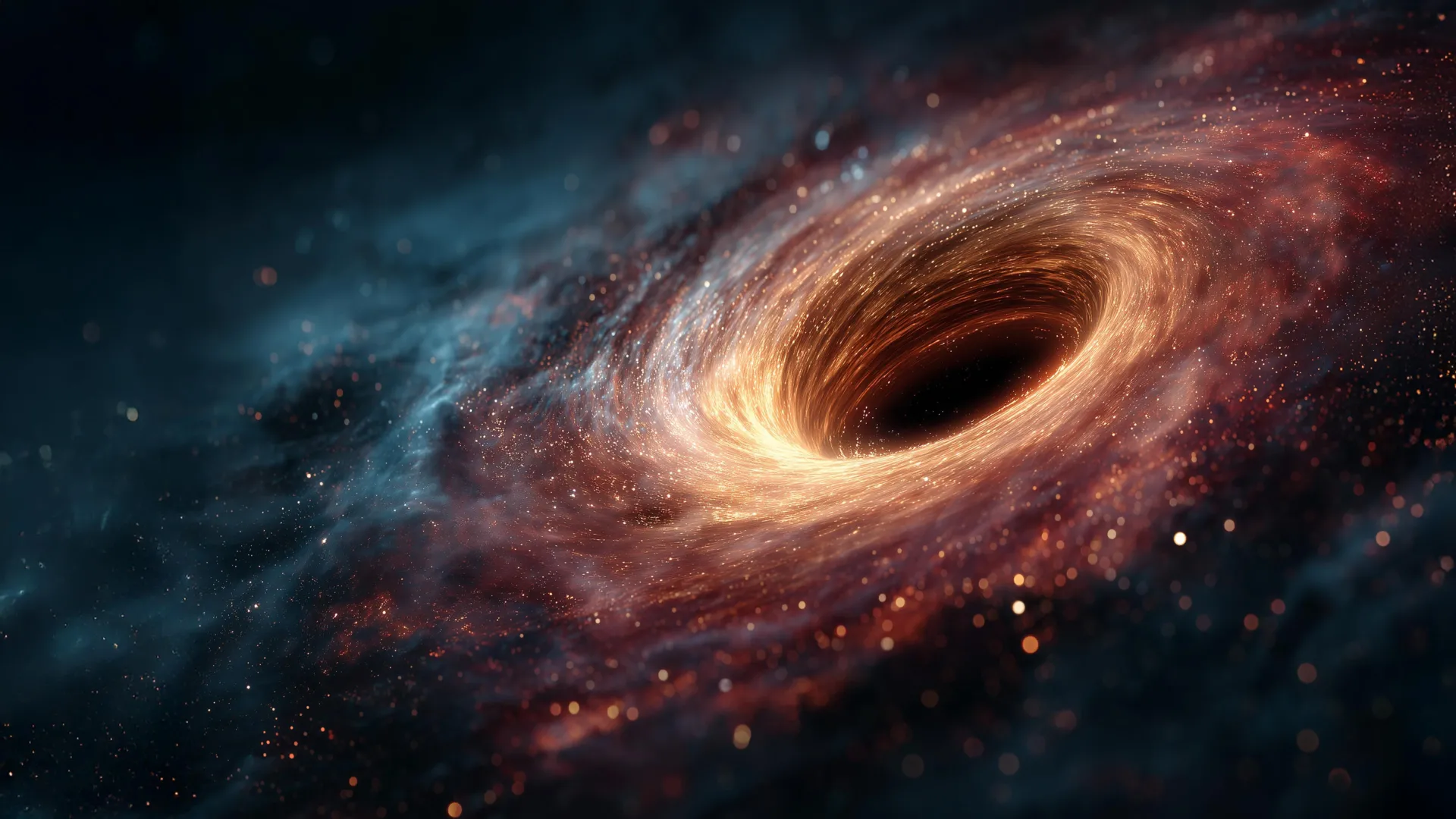
Early Universe Chaos Fueled Supermassive Black Hole Growth

A groundbreaking study from Maynooth University offers a compelling explanation for how supermassive black holes achieved immense sizes in the early universe. Researchers utilized advanced computer simulations to reconstruct the behavior of the first black holes, which formed just a few hundred million years after the Big Bang.

These simulations revealed that the chaotic and dense conditions of the early cosmos, particularly within gas-rich galaxies, triggered a 'feeding frenzy' for early black holes. This process, known as super Eddington accretion, allowed them to grow at rates far exceeding conventional astrophysical models, resolving a long-standing astronomical puzzle.

The findings challenge previous assumptions that only massive 'heavy seed' black holes could explain early supermassive black holes. The research suggests that even smaller 'light seed' black holes could grow spectacularly fast under the turbulent conditions present shortly after the Big Bang. This discovery has implications for future gravitational wave observations from missions like LISA, potentially detecting mergers of these early, rapidly growing black holes.

trending

Padma Awards: Unsung heroes honoured

trending

Mumbai Metro Line 11

trending

Border 2 box office success

trending

Australian Open Heat Suspends Play

trending

MPESB Police Answer Key 2026

trending

Arne Slot on Mo Salah

trending

BBL 2026 Qualifier prediction

trending

Man wins £79,000 Range Rover

trending

Samsung Galaxy S26 Ultra

The study also suggests that the early universe was far more turbulent and productive in forming massive black holes than previously anticipated. This new understanding is poised to reshape theories on black hole origins and their profound influence on cosmic evolution. Future space observatories may provide further insights by detecting the mergers of these nascent black holes.

Disclaimer: This story has been auto-aggregated and auto-summarised by a computer program. This story has not been edited or created by the Feedzop team.
Early black holes grew rapidly due to the chaotic and dense conditions in the early universe, which triggered a process of intense material consumption.
Dense, gas-rich early galaxies provided the extreme environments necessary for black holes to undergo rapid growth spurts.
Yes, future missions like LISA may be able to detect the mergers of these early, rapidly growing baby black holes, offering new observational data.

Read more news on

Scienceside-arrow

You may also like

Massive Star Vanishes, Black Hole Mystery Unfolds

19 Jan • 38 reads

article image

Webb Telescope Uncovers Black Hole's Dusty Secret

18 Jan • 51 reads

article image

JWST's Red Dots: Violent Black Holes Revealed!

14 Jan • 63 reads

article image

Armchair Astronomers Wanted for Black Hole Hunt

30 Dec, 2025 • 129 reads

article image

Alien Life: UK Scientist Predicts Discovery Within 50 Years

21 Dec, 2025 • 142 reads

article image