Home / Science / Ancient Pottery Reveals Math Before Writing
Ancient Pottery Reveals Math Before Writing
16 Jan
Summary
- Pottery up to 8,000 years old features floral designs with petal counts in geometric sequence.
- Researchers suggest this indicates mathematical thought rooted in symmetry and repetition.
- This finding predates written mathematical systems by millennia, challenging historical views.
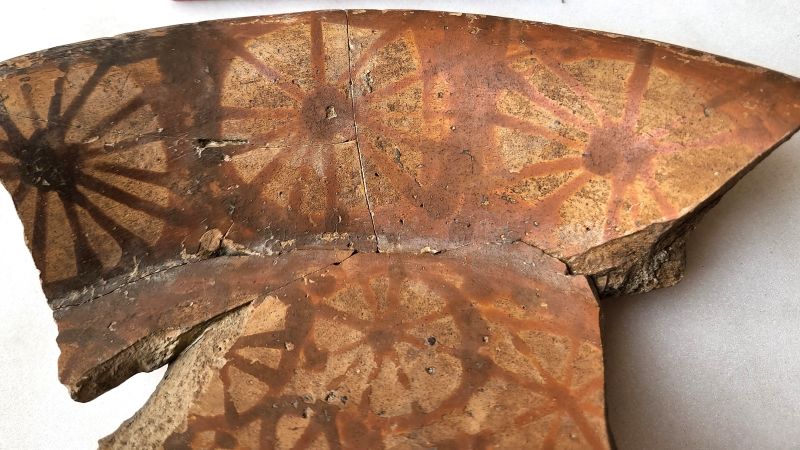
Pottery crafted by the ancient Halafian people, dating back as far as 8,000 years ago, may hold the earliest known evidence of human mathematical thinking. Researchers examined hundreds of pottery fragments from northern Mesopotamia, discovering intricate floral patterns with petal counts consistently following a doubling sequence: four, eight, 16, 32, and 64.
This strict adherence to a geometric progression across numerous sites and over vast distances suggests intentional mathematical reasoning rooted in symmetry and repetition. The Halafians' ability to divide space evenly, reflected in these motifs, likely stemmed from practical needs like resource allocation in their complex village communities. This discovery challenges traditional timelines, as it predates undisputed written mathematical systems by several millennia.
The findings contribute to ethnomathematics, the study of mathematical knowledge embedded in cultural expressions. While some experts caution that the symmetry might be a simple division technique, the researchers argue it represents a foundational step in human cognition, demonstrating that complex thought and mathematical concepts emerged long before the advent of writing.