Home / Science / Ancient Plants Heat Up to Attract Beetles
Ancient Plants Heat Up to Attract Beetles
12 Dec, 2025
Summary
- Cycads use heat to attract beetles, an ancient pollination method.
- Beetles sense infrared heat from cones using specialized antennae.
- This thermal signaling may be the oldest form of plant pollination.
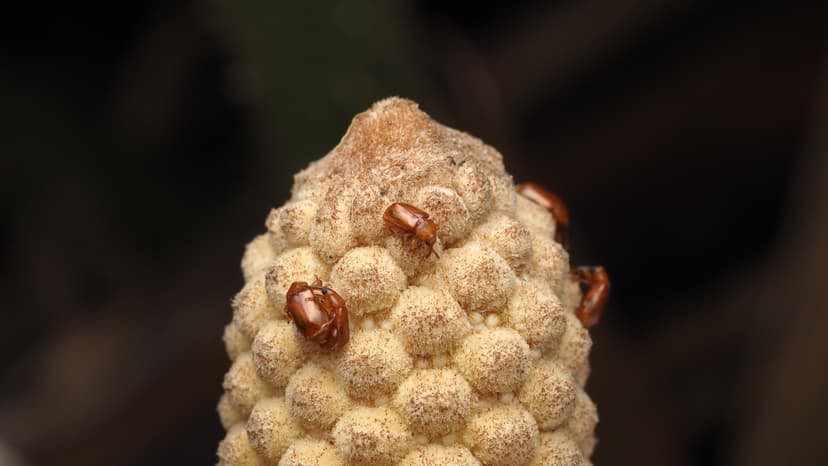
Cycads, a plant lineage dating back 250 million years, utilize a fascinating method to ensure reproduction: they generate heat. These tropical plants, resembling palms, develop cone-like structures that warm up, emitting a glow that attracts beetles. This thermal attraction is crucial for pollination, with evidence suggesting it's a foundational mechanism for plant-insect relationships. The heat not only lures beetles but also guides them through the plant's reproductive cycle.
Researchers discovered that beetles are drawn to the infrared signature of the heat, a signal invisible to humans but detectable by their specialized antennae. Studies on beetle antennae revealed genetic similarities to heat-sensing mechanisms in snakes and mosquitoes. Experiments using 3-D printed cones demonstrated that heat alone, without scent or visual cues, effectively attracts pollinators, highlighting its significance.