Home / Science / White Dwarfs Flaunt Surprising Colors
White Dwarfs Flaunt Surprising Colors
1 Nov
Summary
- White dwarfs can appear pink, green, and purple, not just white.
- Stellar density and planetary material influence their unusual colors.
- Only about one in thirty white dwarfs exhibit non-white coloration.
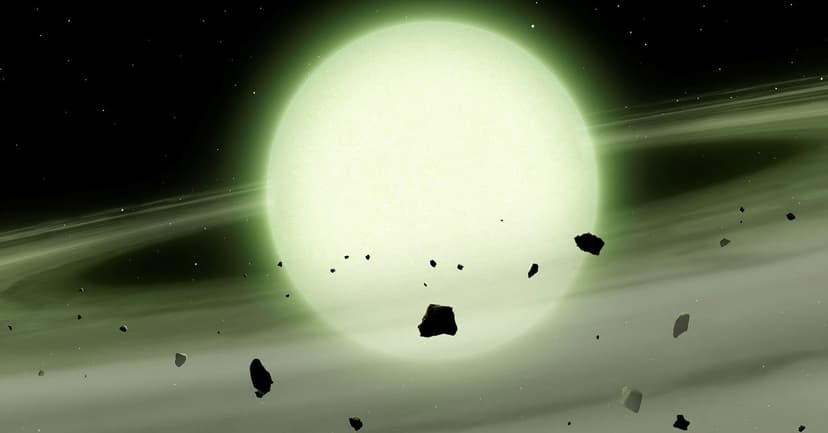
Astronomers have unveiled a more colorful reality for white dwarf stars, finding that they can exhibit hues beyond white, including pink, green, and purple. These stellar remnants, born from stars similar in mass to our sun, are incredibly dense, packing the mass of the sun into the volume of Earth.
The study suggests that the atmospheres of the coolest white dwarfs can reach densities of approximately 1 gram per cubic centimeter, significantly denser than our sun's atmosphere. This high density, along with trace elements like carbon and calcium, causes them to absorb a wider range of light colors.
Furthermore, material from disintegrated planetary systems can accrete onto white dwarfs, influencing their appearance. Carbon-rich white dwarfs often appear pink or purple, while those enriched with asteroid fragments may show yellow or green shades. For instance, WD J1330+6435 is noted as the first known green star in our galaxy.
Despite these findings, most white dwarfs remain white. Researchers examined 152 white dwarfs within 65 light-years and found only five with unusual colors, indicating that about one in thirty exhibits non-white light. This challenges earlier assumptions, which may have been biased by the greater visibility of brighter, hotter, and thus bluer white dwarfs from greater distances.


