Home / Science / Cicada Wings: Nature's Tiny Antibiotic Defenders
Cicada Wings: Nature's Tiny Antibiotic Defenders
4 Nov
Summary
- Cicada wings possess a unique nanostructure that kills bacteria on contact.
- This natural defense mechanism is inspiring new ways to combat antibiotic resistance.
- Researchers are developing synthetic surfaces based on insect wings for medical use.
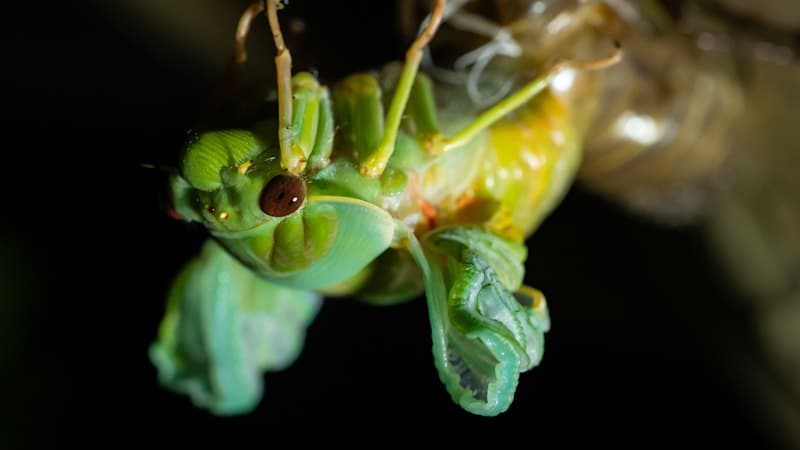
The microscopic structures on cicada wings possess a natural ability to destroy bacteria. Years underground, cicadas emerge to a short, dangerous life, with their wings playing a crucial role in reproduction. Researchers discovered that the wings' surface is covered in tiny nanopillars that rupture bacterial cell walls on contact.
This groundbreaking Australian discovery is driving research into new methods to combat antibiotic resistance, a growing global health crisis. Scientists are exploring ways to replicate these natural nanostructures for various applications. Professor Elena Ivanova of RMIT University is leading efforts to scale up production of these textures for real-world use.
In 2022, a lab-made texture mimicking insect wings was developed, showing potential for antibacterial food packaging. By 2023, a surface with titanium spikes, inspired by insect wings, was created for medical implants, demonstrating effectiveness against drug-resistant fungi. The Watsons' earlier work indicated cicada wings are effective against gram-negative bacteria, while dragonfly wings, with sharper nanopillars, are better for gram-positive bacteria.
Further investigation by Dr. Matthew McCurry revealed these antimicrobial structures in ancient fossilized cicada wings dating back 11 to 16 million years. This research aims to understand the diversity of these structures across different cicada species, potentially aiding in the design of superior synthetic antimicrobial surfaces for critical applications like hospitals and dental implants.


