Home / Science / China's Science Vessel Explores Western Pacific
China's Science Vessel Explores Western Pacific
4 Jul
Summary
- Research vessel Kexue embarks on a 40-day mission in the western Pacific.
- Scientists investigate climate influence and geological evolution of the region.
- New AI-powered LangYa model integrates real-time sensing for marine forecasting.
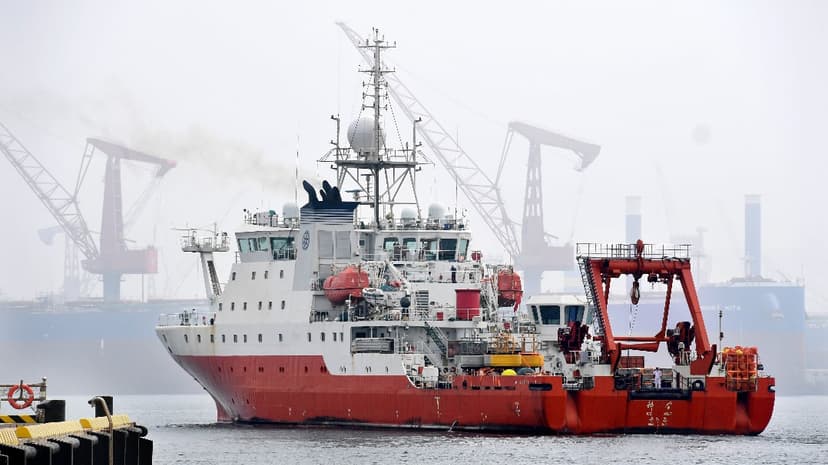
The comprehensive research vessel Kexue, meaning science, has commenced a 40-day expedition in the western Pacific, marking the 15th voyage of a shared research program initiated in 2010. Scientists from more than 10 institutions are participating in this mission.
The core objectives are to understand the western Pacific's influence on regional and global climate, and its complex geological evolution. Research areas include air-sea interaction, physical oceanography, marine biology, chemistry, and seafloor geology.
An integrated observation system, featuring fixed buoys, moorings, underwater gliders, and ship-based transects, will be deployed. A significant development is the naming of the self-developed buoy and mooring systems as "LangYa," designed to work with IOCAS's AI-powered LangYa ocean large model.
This system facilitates a deep-sea intelligent sensing and service framework. The recently upgraded LangYa 2.0 model, released in early June, can predict complex marine phenomena. Real-time data from the LangYa buoy-mooring system will enhance the model's accuracy for predictions and early warnings.
This initiative signals China's acceleration into a new era of deep-sea research, characterized by the fusion of real-time sensing and intelligent computing. The western Pacific is vital for China's weather, climate, and maritime safety.


