Home / Science / Chimps vs. Bonobos: Closer Than Cousins, Worlds Apart
Chimps vs. Bonobos: Closer Than Cousins, Worlds Apart
12 Jan
Summary
- Chimps and bonobos share over 98% DNA but exhibit distinct behaviors.
- Chimps inhabit twelve African countries; bonobos are confined to the Congo River Basin.
- Societies differ: Chimps are male-dominated, while bonobos are matriarchal with strong female bonds.
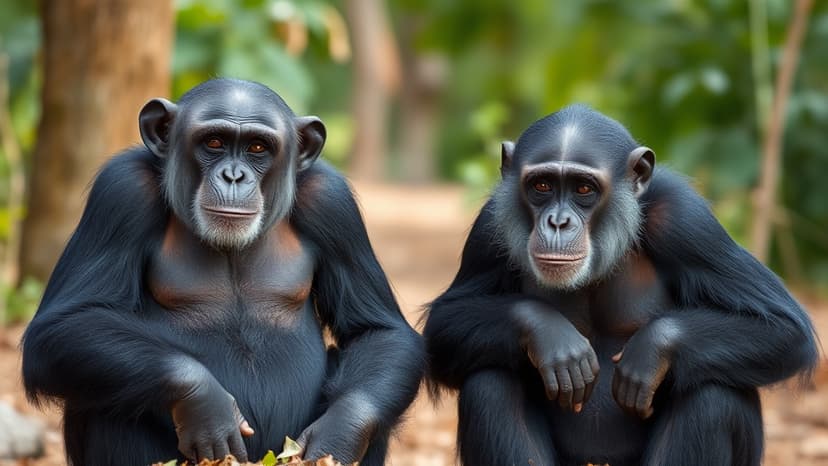
Chimpanzees and bonobos, our closest primate relatives, share over 98% of our DNA yet exhibit vastly different ecological and behavioral patterns. These differences provide crucial insights into how genes and environment shape species evolution and offer a lens into human social dynamics.
Geographically, their distributions diverge significantly. Chimpanzees are found across twelve countries in East, Central, and West Africa, defending larger territories. Bonobos, however, are exclusively located south of the Congo River in the Democratic Republic of the Congo, inhabiting smaller territories with more abundant resources. This geographical barrier is a key factor in their distinct adaptations and behaviors.
Socially, chimpanzee society is hierarchical and male-dominated, often marked by competition and aggression. Bonobo society, conversely, is matriarchal, with strong female alliances and a unique reliance on socio-sexual interactions to maintain peace and cohesion. Both species face the threat of endangerment, highlighting their critical role in biodiversity and our understanding of human origins.