feedzop-word-mark-logo
searchLogin
Feedzop
homeFor YouIndiaIndia
You
bookmarksYour BookmarkshashtagYour Topics
Trending
Terms of UsePrivacy PolicyAboutJobsPartner With Us

© 2026 Advergame Technologies Pvt. Ltd. ("ATPL"). Gamezop ® & Quizzop ® are registered trademarks of ATPL.

Gamezop is a plug-and-play gaming platform that any app or website can integrate to bring casual gaming for its users. Gamezop also operates Quizzop, a quizzing platform, that digital products can add as a trivia section.

Over 5,000 products from more than 70 countries have integrated Gamezop and Quizzop. These include Amazon, Samsung Internet, Snap, Tata Play, AccuWeather, Paytm, Gulf News, and Branch.

Games and trivia increase user engagement significantly within all kinds of apps and websites, besides opening a new stream of advertising revenue. Gamezop and Quizzop take 30 minutes to integrate and can be used for free: both by the products integrating them and end users

Increase ad revenue and engagement on your app / website with games, quizzes, astrology, and cricket content. Visit: business.gamezop.com

Property Code: 5571

Home / Science / Chernobyl Fungus Eats Radiation, Offers Space Shield

Chernobyl Fungus Eats Radiation, Offers Space Shield

2 Dec, 2025

•

Summary

  • A black fungus thrives on Chernobyl radiation, converting gamma rays into energy.
  • This radiotrophic fungus could be used to build radiation-proof space bases.
  • NASA explores using the mold to protect astronauts from cosmic radiation.
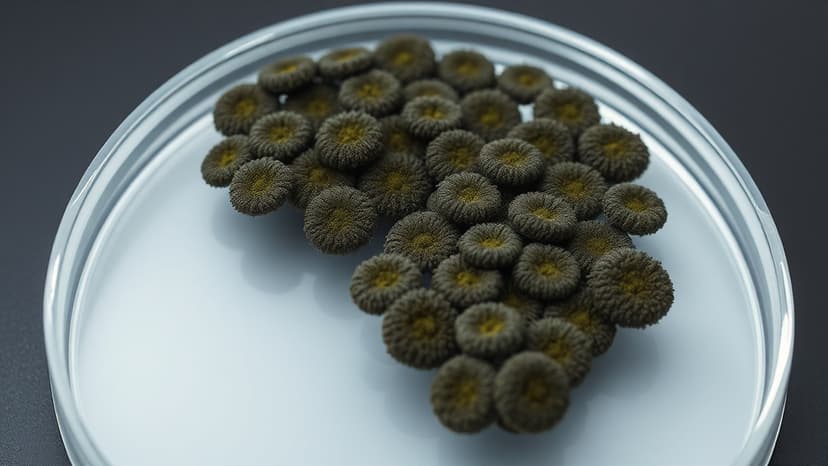
Chernobyl Fungus Eats Radiation, Offers Space Shield

In the shadow of the Chernobyl nuclear disaster, scientists have identified a remarkable black fungus, Cladosporium sphaerospermum, that not only survives but actively thrives on radiation. This radiotrophic organism possesses the unique ability to convert gamma rays into chemical energy, a process scientists are calling 'radiosynthesis.' Its resilience and growth are significantly enhanced by radiation exposure.

NASA is now investigating the potential of this fungus for groundbreaking applications, including the development of 'fungal bricks.' These could serve as lightweight yet highly effective building materials for lunar and Martian habitats, offering superior protection against cosmic radiation compared to traditional heavy shielding. Studies on the International Space Station have already demonstrated the mold's rapid growth and significant radiation-blocking capabilities.

trending

Chelsea beats West Ham 3-2

trending

Liverpool, Newcastle face injury woes

trending

WWE Royal Rumble in Riyadh

trending

Barcelona faces Elche in LaLiga

trending

Goretzka staying at Bayern Munich

trending

ICC T20 World Cup squads

trending

Gold, silver ETFs crashed

trending

Curran, Pandya T20Is stats compared

trending

Suryakumar Yadav T20I record

This discovery holds immense promise, not only for safeguarding future astronauts during deep space missions but also for potential applications in nuclear waste remediation on Earth. The Chernobyl fungus represents a significant scientific advancement, potentially revolutionizing radiation protection and construction in extreme environments.

Disclaimer: This story has been auto-aggregated and auto-summarised by a computer program. This story has not been edited or created by the Feedzop team.
The Chernobyl fungus, Cladosporium sphaerospermum, thrives on radiation by converting gamma rays into chemical energy, a process being studied for its potential applications.
NASA is exploring using the fungus to create radiation-blocking building materials for moon and Mars bases and to protect astronauts from cosmic rays.
Radiosynthesis is the theoretical process by which the Chernobyl fungus converts radiation into energy, discovered growing on reactor walls after the Chernobyl disaster.

Read more news on

Scienceside-arrowNASAside-arrow

You may also like

Chernobyl Survivor Recalls Fiery Ordeal

30 Jan • 10 reads

article image

Fukushima: Nature reclaims ghost towns

27 Jan • 27 reads

article image

Radioactive Trace Found in Philippine Waters

19 Jan • 57 reads

article image

Chernobyl Dome Breach: Radioactive Fears Rise

18 Dec, 2025 • 179 reads

article image

Radioactive Shrimp Scare: 85,000 Bags Recalled

18 Dec, 2025 • 180 reads

article image