Home / Science / CERN's LHC Upgrade: New Magnets, New Challenges
CERN's LHC Upgrade: New Magnets, New Challenges
20 Nov
Summary
- Nb3Sn magnets replace older NbTi ones for increased collision rates.
- High-Luminosity LHC upgrade is slated to begin operation in June 2030.
- Manufacturing the new magnets presents significant material and process challenges.
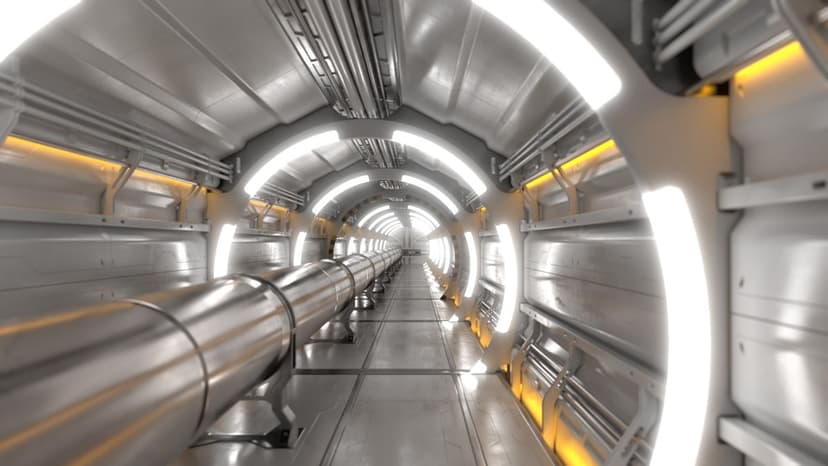
The Large Hadron Collider has entered a period of deconstruction as CERN engineers work on a significant upgrade. The accelerator has been switched off since late June 2026 to remove 28 superconducting magnets, including the critical 'inner triplets' that focus proton beams. These are being replaced by magnets made from niobium-tin (Nb3Sn), a material capable of withstanding stronger magnetic fields than the original niobium-titanium (NbTi).
The transition to Nb3Sn presents considerable manufacturing hurdles. This superconductor is brittle and cannot be bent after formation, requiring a complex 'wind-and-react' process. Out of 250 coils produced for the upgrade, 25 failed due to manufacturing errors or quality issues. This challenging process highlights the technological advancements needed for future high-field magnet development.
The High-Luminosity LHC (HL-LHC) upgrade, now scheduled to commence operation in June 2030, aims to dramatically increase the number of proton collisions. This enhancement is crucial for detecting rare events and gathering more data. The new magnets feature a wider aperture, enabling tighter focusing of proton beams to the collision points, a vital step for achieving higher luminosity.
Beyond the immediate HL-LHC upgrade, the development of Nb3Sn magnets is foundational for CERN's future projects, such as the proposed Future Circular Collider (FCC-hh). The success of the 30 quadrupoles for the HL-LHC provides valuable insights into the production requirements for the thousands of magnets anticipated for the FCC-hh, signaling a pivotal moment in accelerator technology.


