

Home / Science / CERN Seeks Billions for Future Collider
CERN Seeks Billions for Future Collider
24 Apr
Summary
- CERN plans a 91km Future Circular Collider to advance physics understanding.
- The project requires an estimated 15 billion Swiss francs ($19 billion) in funding.
- CERN is exploring private donations alongside sovereign funding for the new collider.
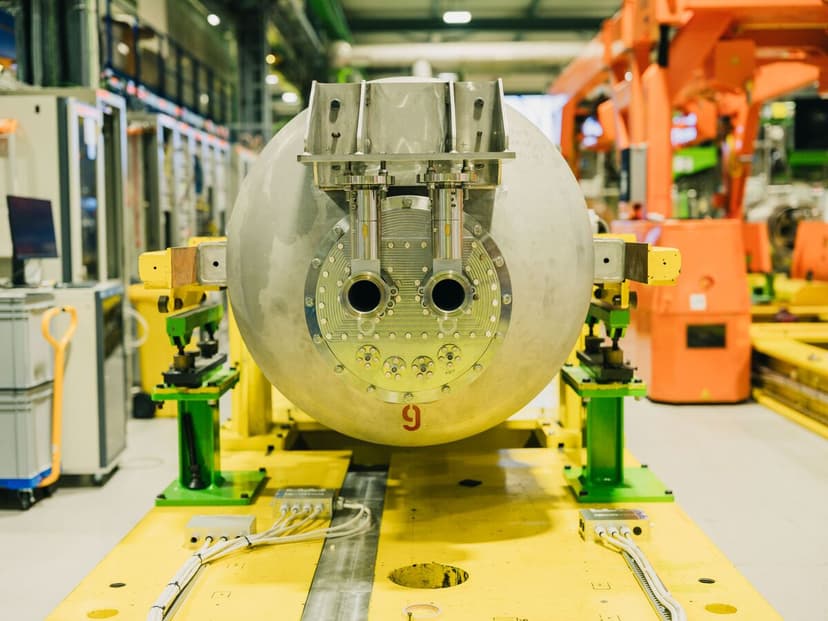
CERN scientists are proposing the construction of a Future Circular Collider (FCC), a 91-kilometer loop that would dwarf the current Large Hadron Collider. This new facility aims to conduct ultra-precise, higher-energy proton collisions to unravel deeper mysteries of the universe, including the nature of dark matter and the Higgs Boson's self-interaction.
The ambitious FCC project comes with a significant price tag of approximately 15 billion Swiss francs ($19 billion). To secure this funding, CERN is exploring new avenues beyond its traditional reliance on 25 member states. For the first time, the institute has begun soliciting donations from private donors, with initial commitments totaling $1 billion.
Meanwhile, the existing LHC at CERN is undergoing a 'HiLumi' upgrade, with significant in-kind contributions from the United States. Despite strong past partnerships and contributions, US funding for CERN's detectors has faced proposed cuts in recent years. CERN's new director general, Mark Thomson, faces the dual challenge of securing substantial funding for the FCC and navigating complex international relationships.

