Home / Science / How Do Cats Always Land on Their Feet? Spine Flexibility Key
How Do Cats Always Land on Their Feet? Spine Flexibility Key
12 Mar
Summary
- A recent study investigates the 1894 'falling cat' enigma.
- Cats' flexible upper spines allow them to reorient mid-air.
- New research supports the 'legs in, legs out' falling model.
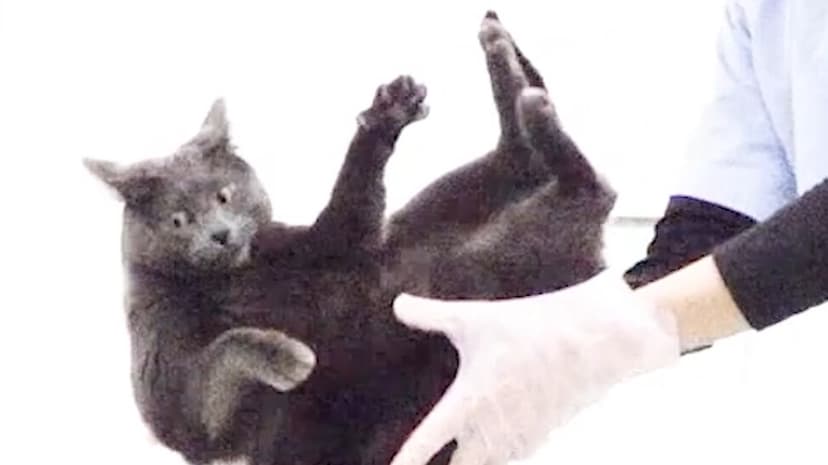
Scientists continue to unravel the long-standing 'falling cat' problem, a question first seriously investigated by Étienne-Jules Marey in 1894. Recent research, published in The Anatomical Record, offers novel perspectives by focusing on the feline spine's structure. The study suggests that a highly flexible segment in the cat's upper thoracic vertebrae is key to its ability to correct orientation during a fall.
Researchers examined donated cat cadavers and conducted safe dropping experiments on live cats. Their findings indicate that the upper spine can twist significantly, up to 360 degrees, while the lower spine is stiffer. This anatomical feature aligns with observations of cats turning their front legs before their hind legs, supporting the 'legs in, legs out' falling model.
While the exact mechanics are still being debated, this research provides valuable data for physicists refining mathematical models of feline free fall. The study also noted a potential right-side bias in how cats correct their position. Future research aims to further develop mathematical and 3-D models to definitively solve this fascinating enigma.