Home / Science / Carbon Fiber's Deep-Sea Secret: Moisture is Key
Carbon Fiber's Deep-Sea Secret: Moisture is Key
21 Mar
Summary
- Moisture absorption critically impacts carbon fiber degradation over time.
- Temperature and humidity had little effect on material aging.
- Mixed carbon fiber weaves resisted water absorption best in new study.
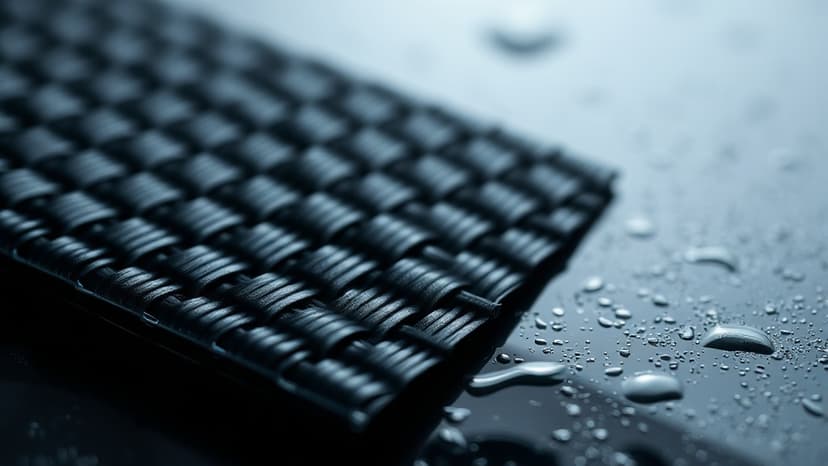
Aerospace engineers commonly use carbon fiber for its lightweight strength in aircraft construction. However, a recent study by Australian researchers has uncovered a critical vulnerability of this material: its susceptibility to moisture absorption. The research, conducted by engineers from RMIT and Monash University, indicates that the amount of moisture a carbon fiber composite absorbs is the most significant factor in its degradation over time.
During their investigations into how carbon fiber designs fare under various atmospheric conditions, the study coauthor Katherine Grigoriou stated that the precise aging temperature or humidity was less important than the ultimate moisture content absorbed by the material. Their experiments subjected different carbon fiber weaves to extreme heat and humidity, finding that mixed weaves with both 90-degree and 45-degree angles resisted water absorption degradation most effectively.
These findings challenge the conventional approach to simulating material lifespan in labs. The research, published in Composites Part A: Applied Science and Manufacturing, suggests that a thorough understanding and control of moisture content are essential for accurately predicting carbon fiber's long-term performance. This insight is particularly relevant when considering the OceanGate Titan submersible tragedy in 2023, where material science issues, including waterlogging effects on binding epoxies, are believed to have contributed to its fatal implosion.