Home / Science / Study: Brain Comprehension Mirrors AI's Deep Layers
Study: Brain Comprehension Mirrors AI's Deep Layers
21 Jan
Summary
- Brain processes spoken language in steps like AI.
- Deep AI layers match later human brain activity.
- New dataset aids study of brain's meaning formation.
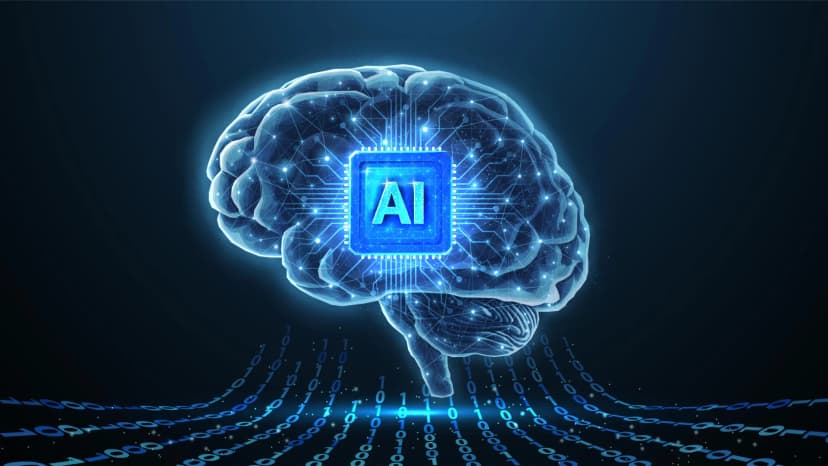
A groundbreaking study indicates that the human brain processes spoken language in a manner strikingly similar to sophisticated AI language models. Researchers observed brain activity from individuals listening to a story and discovered that later brain responses closely mirror the deeper layers of AI systems, especially within well-known areas like Broca's area. This finding suggests that language comprehension is a stepwise process, rather than solely based on fixed symbols and rigid hierarchies. The research challenges long-standing linguistic theories, pointing towards a more flexible, statistical approach where meaning gradually emerges from context. The study's findings were supported by a newly released public dataset, offering a valuable resource for future investigations into how the brain constructs meaning. Scientists tracked brain activity using electrocorticography recordings, finding a temporal match between neural signals and the layered processing within AI models such as GPT-2 and Llama 2. This suggests a convergence in how both biological and artificial systems build understanding over time. The team also noted that traditional linguistic elements like phonemes did not explain real-time brain activity as effectively as the contextual representations generated by AI models, reinforcing the idea of context-driven meaning formation in the brain.