

Home / Science / Dam Bering Strait to Save Climate?
Dam Bering Strait to Save Climate?
25 Apr
Summary
- A 50-mile dam across Bering Strait could stabilize ocean currents.
- The AMOC is weakening due to warming and melting ice.
- The dam idea is a 'proof of concept,' not an immediate plan.
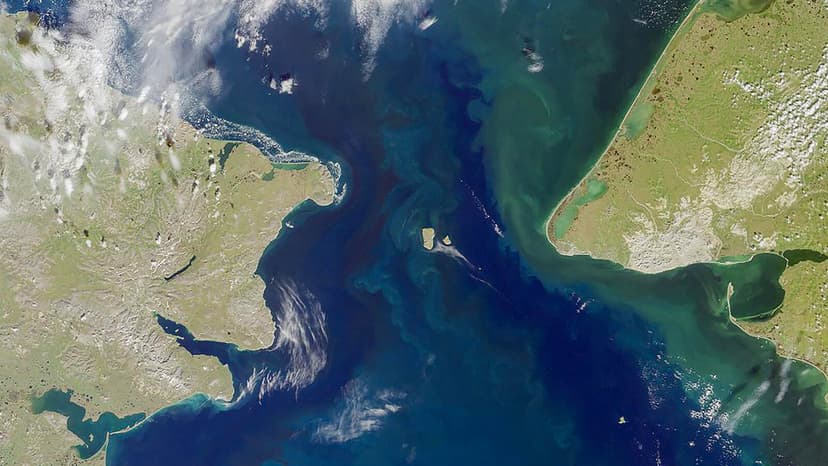
A new study suggests building a 50-mile dam across the Bering Strait could help stabilize a critical system of ocean currents. The Atlantic Meridional Overturning Circulation (AMOC), vital for global climate regulation, has weakened in recent decades. Researchers propose this dam as a "proof of concept" to prevent a potential collapse.
Warming temperatures and melting Arctic ice are disrupting the AMOC by increasing freshwater in the North Atlantic. This freshwater influx prevents warm water from sinking, potentially leading to colder temperatures in Northern Europe and altered sea levels along the U.S. East Coast.
The Bering Strait dam, separating Russia and Alaska, would alter the balance of fresh and salty water between the Pacific, Arctic, and Atlantic oceans. Computer models indicate that closing the strait could stabilize a strong AMOC by reducing freshwater outflow into the Atlantic.
However, the study's authors emphasize that more research is needed to confirm the dam's effectiveness and assess its environmental consequences. They note that if the AMOC is already near collapse, closing the strait could paradoxically worsen the situation. The precise state of the AMOC remains uncertain, with some projections suggesting a collapse before the end of the century.
Critics point to the immense risks and permanence of such a geoengineering project. Potential impacts on fisheries and shipping traffic are significant concerns. Unlike some other geoengineering ideas, a large ocean dam could not easily be dismantled if its effects are not as predicted, making it a relatively permanent and potentially risky intervention.
