Home / Science / Eagle Outsmarts Adults for Fish Prize
Eagle Outsmarts Adults for Fish Prize
30 Jul
Summary
- Bald eagles often steal food, especially from each other.
- Young eagles use timing and observation to get food.
- Size and age determine dominance in eagle food fights.
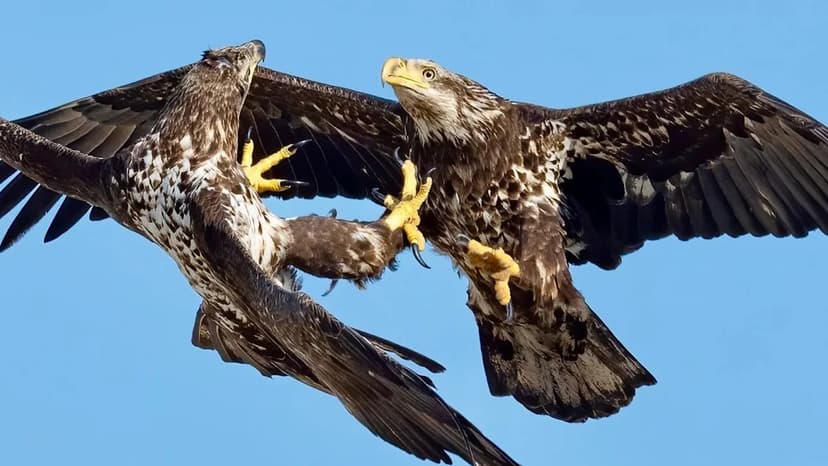
Bald eagles exhibit a well-documented behavior of stealing food from one another, a practice that conserves energy, especially during leaner seasons. This opportunistic stealing is common in their daily lives and has been extensively studied by wildlife experts.
Dominance hierarchies are evident in food disputes, with physical displays like spread wings and raised claws signaling intent to fight. While direct physical confrontations, such as mid-air tumbles, are rare and risky, they usually occur over territory or mating, not typically over meals. Age and size are primary determinants, with adult eagles, particularly females who are larger, usually prevailing over younger birds.
A young eagle's strategy of waiting patiently and seizing opportunities when dominant birds are distracted demonstrates intelligent behavior. This opportunistic stealing aligns with tactics used by lower-ranking animals in various species to bypass the established pecking order. Such methods allow them to acquire food without engaging in strength-based confrontations.
Observation plays a significant role in young eagles' learning process, enhancing their hunting and foraging skills over time. Relying on scavenging and stealing is crucial for first-year eagles, who are less adept at catching their own prey. The observed young eagle exemplifies this, using smart timing and positioning instead of direct combat to secure its prize.


