

Home / Science / Moon Comms Go Cheap: Australia Receives NASA Data
Moon Comms Go Cheap: Australia Receives NASA Data
23 Apr
Summary
- Low-cost terminal in Australia received data from Moon.
- Laser communications offer faster speeds than radio.
- This success paves way for scaling global laser networks.
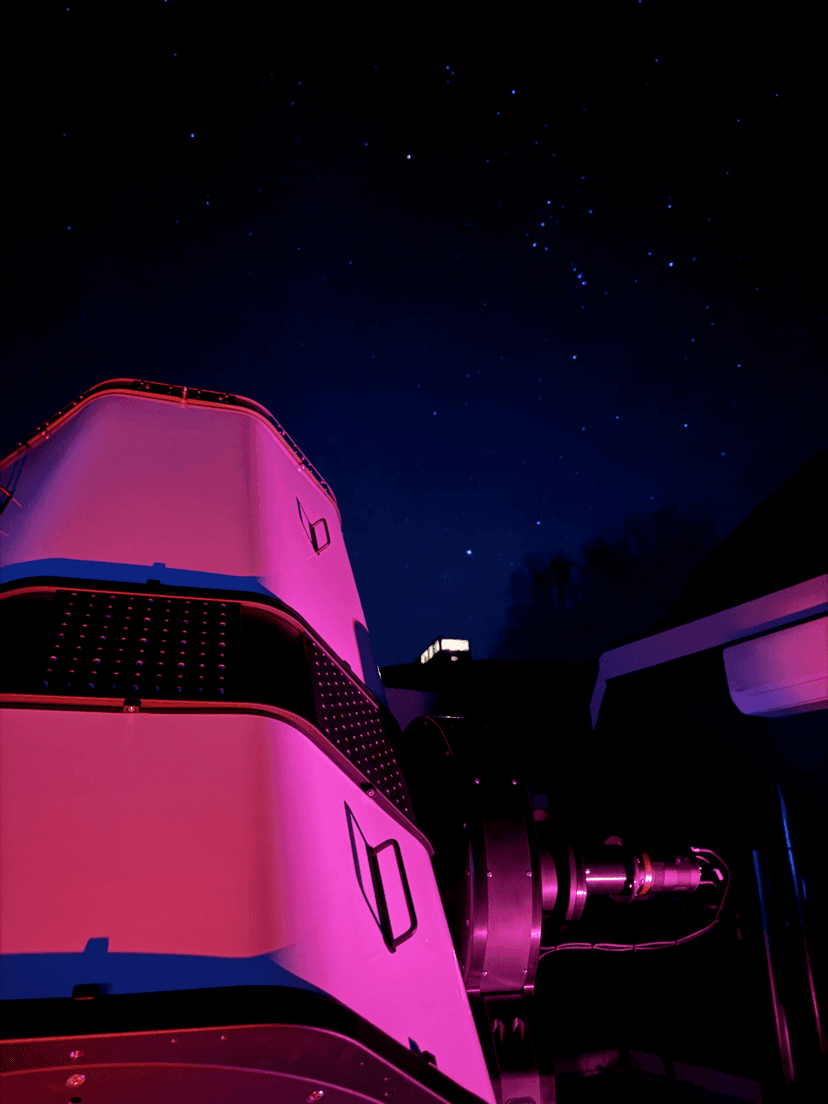
Earlier this month, a groundbreaking demonstration during NASA's Artemis II mission showcased the power of laser communications beaming images from lunar orbit to Earth. A novel, low-cost terminal operated by the Australian National University successfully captured data transmissions from the Orion spacecraft at an impressive rate of 260 megabits per second. This Australian reception site, a collaboration between Observable Space and Quantum Opus, highlights a significant advancement in affordable deep-space communication technology.
The terminal, which cost under $5 million, utilized Observable Space's software and telescope, combined with Quantum Opus's photonic sensor. This contrasts with more expensive, bespoke solutions. NASA has been actively testing deep space laser communications for years, with Artemis II marking its most extensive trial yet. The success of this Australian terminal, alongside NASA's own receivers, demonstrates the viability of high-throughput laser links, which offer substantial speed advantages over traditional radio frequency transmissions.
While laser communications provide superior data rates, they are susceptible to weather disruptions and require a clear line of sight. The strategic placement of a receiving station in Australia, on the opposite side of the world from the US, proved essential. This technological leap, spearheaded by companies like Observable Space, suggests that space-to-Earth laser downlinks are poised for scalability, potentially leading to a global network for receiving data from various satellites.
