feedzop-word-mark-logo
searchLogin
Feedzop
homeFor YouIndiaIndia
You
bookmarksYour BookmarkshashtagYour Topics
Trending
Terms of UsePrivacy PolicyAboutJobsPartner With Us

© 2026 Advergame Technologies Pvt. Ltd. ("ATPL"). Gamezop ® & Quizzop ® are registered trademarks of ATPL.

Gamezop is a plug-and-play gaming platform that any app or website can integrate to bring casual gaming for its users. Gamezop also operates Quizzop, a quizzing platform, that digital products can add as a trivia section.

Over 5,000 products from more than 70 countries have integrated Gamezop and Quizzop. These include Amazon, Samsung Internet, Snap, Tata Play, AccuWeather, Paytm, Gulf News, and Branch.

Games and trivia increase user engagement significantly within all kinds of apps and websites, besides opening a new stream of advertising revenue. Gamezop and Quizzop take 30 minutes to integrate and can be used for free: both by the products integrating them and end users

Increase ad revenue and engagement on your app / website with games, quizzes, astrology, and cricket content. Visit: business.gamezop.com

Property Code: 5571

Home / Science / Astronaut's 1500km drive ends in arrest

Astronaut's 1500km drive ends in arrest

6 Feb

•

Summary

  • Astronaut drove 1500km for romantic rival confrontation.
  • She wore adult diapers to avoid stops on the drive.
  • Incident prompted major NASA mental health protocol changes.
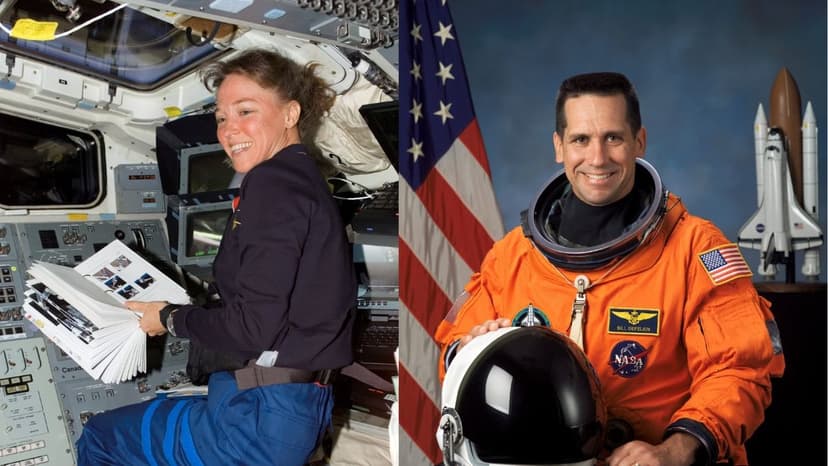
Astronaut's 1500km drive ends in arrest

In February 2007, mission specialist Lisa Nowak was arrested in Orlando following a journey of nearly 1500 kilometers from Houston. The arrest stemmed from a romantic rivalry involving a fellow astronaut and concerned a confrontation at Orlando International Airport.

During her extensive drive, Nowak reportedly utilized adult diapers to bypass the need for rest stops. She faced initial charges including attempted first-degree murder, attempted kidnapping, and battery.

While the attempted murder charge was resolved in 2009 through a plea agreement, the scandal significantly impacted NASA. It challenged the perception of astronauts as emotionally invincible and highlighted a gap in mental health support for long-duration missions.

trending

Islamabad suicide blast kills 31

trending

MRF profit doubles

trending

T20 World Cup opening ceremony

trending

VTU adopts Artificial Super Intelligence

trending

Raja Saab extended cut

trending

UAE expected to win

trending

U19 World Cup in Harare

trending

Jio Hotstar buys Dhurandhar rights

trending

India A vs Namibia live

Previously, NASA relied on rigorous initial psychological screenings. The Nowak incident demonstrated that extreme pressure, both in space and on Earth, could affect even highly qualified individuals. This led to a paradigm shift in astronaut care.

Following the event, NASA implemented annual psychological evaluations for all active astronauts. The agency also established the Behavioural Health and Performance group to study the psychological effects of isolation and confinement.

This new approach emphasizes monitoring individual well-being, fostering team cohesion, and supporting astronauts' Earth-based support systems. NASA now also tracks former astronauts' behavioral health to understand long-term risks associated with space travel.

Disclaimer: This story has been auto-aggregated and auto-summarised by a computer program. This story has not been edited or created by the Feedzop team.
Lisa Nowak was arrested in Orlando after driving nearly 1500 kilometers to confront a romantic rival, an incident that initially led to attempted murder charges.
Following the scandal, NASA shifted to annual psychological evaluations for all active astronauts and established the Behavioural Health and Performance group.
The event shattered the public image of astronauts and led NASA to adopt a more empathetic, science-based approach to monitoring astronaut mental health and team dynamics.

Read more news on

Scienceside-arrowNASAside-arrow

You may also like

Orion's Tiny Cabin: Astronauts Face Cramped Moon Mission

30 Jan • 50 reads

article image

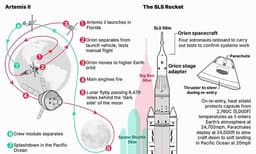
Artemis II: Humans Return to Lunar Orbit After 50 Years

24 Jan • 80 reads

article image

ISS Ultrasound Hinted at Astronaut Medical Emergency

23 Jan • 58 reads

article image

Artemis II: Humanity's Farthest Space Journey Nears

17 Jan • 186 reads

article image

Astronauts Leap into 2026 with Historic Spacewalk

8 Jan • 217 reads

article image