feedzop-word-mark-logo
searchLogin
Feedzop
homeFor YouIndiaIndia
You
bookmarksYour BookmarkshashtagYour Topics
Trending
Terms of UsePrivacy PolicyAboutJobsPartner With Us

© 2026 Advergame Technologies Pvt. Ltd. ("ATPL"). Gamezop ® & Quizzop ® are registered trademarks of ATPL.

Gamezop is a plug-and-play gaming platform that any app or website can integrate to bring casual gaming for its users. Gamezop also operates Quizzop, a quizzing platform, that digital products can add as a trivia section.

Over 5,000 products from more than 70 countries have integrated Gamezop and Quizzop. These include Amazon, Samsung Internet, Snap, Tata Play, AccuWeather, Paytm, Gulf News, and Branch.

Games and trivia increase user engagement significantly within all kinds of apps and websites, besides opening a new stream of advertising revenue. Gamezop and Quizzop take 30 minutes to integrate and can be used for free: both by the products integrating them and end users

Increase ad revenue and engagement on your app / website with games, quizzes, astrology, and cricket content. Visit: business.gamezop.com

Property Code: 5571

trending

Chelsea beats West Ham 3-2

trending

Liverpool, Newcastle face injury woes

trending

WWE Royal Rumble in Riyadh

trending

Barcelona faces Elche in LaLiga

trending

Goretzka staying at Bayern Munich

trending

ICC T20 World Cup squads

trending

Gold, silver ETFs crashed

trending

Curran, Pandya T20Is stats compared

trending

Suryakumar Yadav T20I record

Home / Science / Lab-Grown Wombs Peek Inside Early Human Development

Lab-Grown Wombs Peek Inside Early Human Development

23 Dec, 2025

Summary

  • Scientists created artificial wombs to observe human embryo implantation.
  • This research aims to understand miscarriages and infertility causes.
  • The technology raises significant ethical concerns about future development.
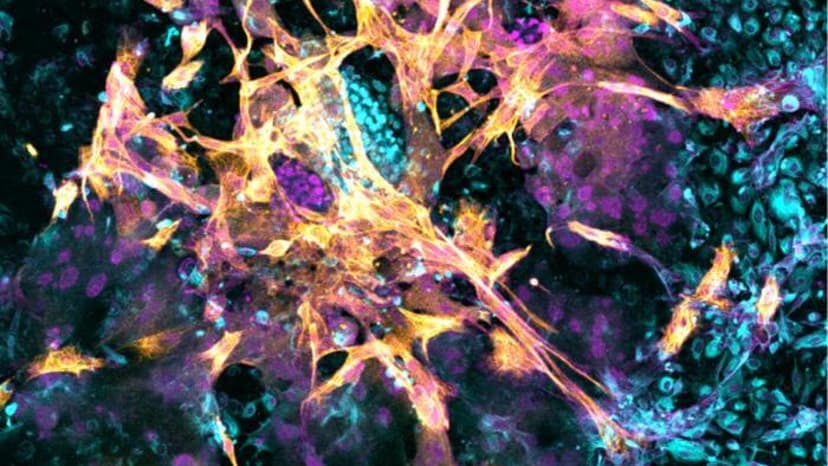
Lab-Grown Wombs Peek Inside Early Human Development

Researchers have achieved an unprecedented view into human embryo implantation by cultivating primitive, womb-like environments in laboratories. These artificial wombs, created using cells from uterine linings, allow scientists to observe the critical process of an embryo burrowing into the uterine wall, a phenomenon previously considered a "black box" due to its inaccessibility within the human body.

This groundbreaking work, detailed in recent scientific publications, seeks to uncover vital information about early human development, offering potential new avenues for understanding and treating miscarriages and infertility. The "womb on a chip" technology has already provided insights into molecular interactions during implantation and even facilitated the identification of drugs that might prevent miscarriages.

While the scientific community expresses excitement over the potential for new discoveries, the research simultaneously prompts profound ethical debates. Concerns are raised about the destruction of embryos for research and the "slippery slope" towards advanced ectogenesis, where embryos might develop significantly or even completely in lab-grown environments, potentially leading to unsettling future applications.


Disclaimer: This story has been auto-aggregated and auto-summarised by a computer program. This story has not been edited or created by the Feedzop team.
It's a lab-created device using uterine lining cells to mimic a womb environment for studying early human embryo implantation.
By observing implantation failures in artificial wombs, researchers gain molecular insights into why pregnancies may not progress.
Concerns include embryo destruction for research and the potential for excessive embryo development in labs, likened to ectogenesis.

Read more news on

Scienceside-arrow
•

You may also like

Men's Biological Clock Ticks Earlier Than Thought

24 Jan • 38 reads

article image

France Birth Rate Plummets Amid Fertility Crisis

4 Jan • 146 reads

article image

New IVF Tech Promises Less Pain, More Hope

1 Jan • 132 reads

article image

Shorter Wait, Better Embryos: IVF Timing Trick

26 Dec, 2025 • 185 reads

article image

Sexual Minority Births Face Higher C-Section Risk

17 Dec, 2025 • 179 reads