

Home / Science / NASA's Moon Return: Delays, Billions, and a Risky Race
NASA's Moon Return: Delays, Billions, and a Risky Race
31 Mar
Summary
- Artemis II mission aims to test SLS rocket and Orion capsule for lunar trip.
- Program faces significant delays and cost overruns, exceeding $93 billion.
- New plans adjust roles for contractors, including SpaceX and Blue Origin.
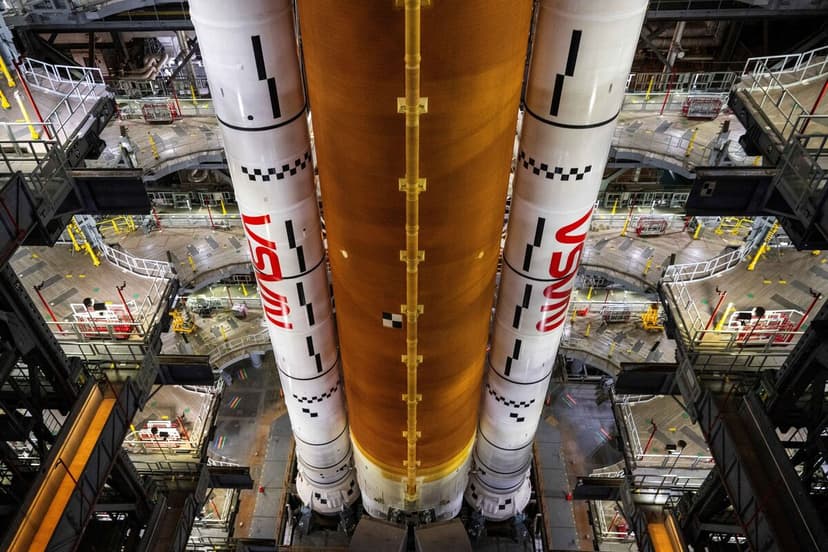
NASA's ambitious Artemis program, intended to rekindle the spirit of the Apollo missions, is navigating substantial delays and cost overruns. The program's initial flight was planned for 2017 but faced multiple postponements, with the upcoming Artemis II mission now tentatively scheduled for April 1, 2026. This mission will test the Boeing-built Space Launch System rocket and Lockheed Martin's Orion crew capsule, carrying four astronauts on a lunar flyby.
The overall cost of Artemis is projected to exceed $93 billion, with each of the first four launches estimated at over $4 billion. To manage expenses and accelerate development, NASA has engaged private companies like SpaceX and Blue Origin, though this partnership has yielded mixed results, necessitating revised proposals for lunar landers.
Recent adjustments to the Artemis roadmap include a new test mission next year and a revised Artemis IV target of 2028 for the moon landing. These changes also de-emphasize Boeing's role, with consideration given to using SpaceX's Starship for propulsion. Safety experts have welcomed these modifications, viewing the earlier plans as overly aggressive.
The program's history is marked by shifting presidential priorities and congressional influences, contributing to its escalating costs and delayed timelines. While the Apollo program also incurred significant expenses, current leadership's vision and clarity are debated, with some suggesting a lack of clear purpose.
NASA is also adapting its approach to lunar landers and spacesuits, with companies like Axiom Space developing new suits. These evolving strategies aim to ensure a safe and sustainable return to the moon, potentially by 2028, despite ongoing engineering hurdles and the pressure of international competition.
