


Home / Science / Moon's Far Side Holds Earth's Secrets
Moon's Far Side Holds Earth's Secrets
6 Apr
Summary
- The far side of the moon offers clues to Earth's origins.
- Artemis II aims to test NASA's equipment for future moon landings.
- Moon exploration could foster a permanent human presence in space.
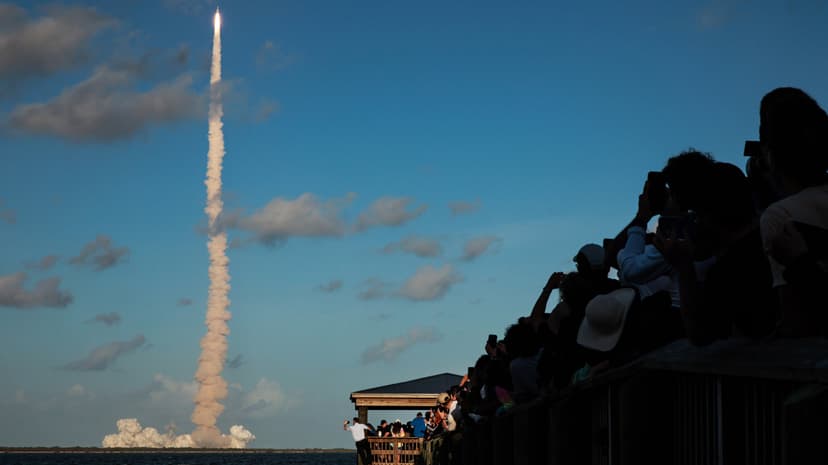
The Artemis II mission is set to fly by the moon, marking humanity's first journey into space since the 1970s. Astronaut Kate Rubins, astrobiologist David Grinspoon, and science editor Neel Patel discussed the mission's significance and future implications.
Rubins highlighted the astronauts' focus amid cramped conditions and tight schedules, emphasizing mission execution. Grinspoon noted the far side of the moon's geological importance for understanding lunar and Earth's origins, suggesting ancient Earth rocks may be preserved there.
Patel expressed excitement about establishing a permanent human presence, but also voiced concerns about geopolitical motivations and the ultimate goal of lunar outposts. Grinspoon shared ambivalence, criticizing competition-driven rhetoric and advocating for a unified, long-term vision.
Rubins stressed the international nature of the Artemis Accords, involving 61 countries, and its potential to inspire youth. Patel added that the mission aims to boost the commercial space industry, enabling private sector ventures.
Addressing the Mars question, Grinspoon and Rubins stated that moon exploration is crucial for developing deep space navigation and life support systems, serving as a vital stepping stone. They also proposed using lunar exploration to study human microbial signatures, protecting future Mars missions.
Regarding resource utilization, Grinspoon noted the speculative value of lunar resources like Helium-3. Rubins pointed to water ice as a key resource for in-space fuel, emphasizing that building lunar infrastructure is essential for economic viability and future exploration.
