feedzop-word-mark-logo
searchLogin
Feedzop
homeFor YouIndiaIndia
You
bookmarksYour BookmarkshashtagYour Topics
Trending
Terms of UsePrivacy PolicyAboutJobsPartner With Us

© 2026 Advergame Technologies Pvt. Ltd. ("ATPL"). Gamezop ® & Quizzop ® are registered trademarks of ATPL.

Gamezop is a plug-and-play gaming platform that any app or website can integrate to bring casual gaming for its users. Gamezop also operates Quizzop, a quizzing platform, that digital products can add as a trivia section.

Over 5,000 products from more than 70 countries have integrated Gamezop and Quizzop. These include Amazon, Samsung Internet, Snap, Tata Play, AccuWeather, Paytm, Gulf News, and Branch.

Games and trivia increase user engagement significantly within all kinds of apps and websites, besides opening a new stream of advertising revenue. Gamezop and Quizzop take 30 minutes to integrate and can be used for free: both by the products integrating them and end users

Increase ad revenue and engagement on your app / website with games, quizzes, astrology, and cricket content. Visit: business.gamezop.com

Property Code: 5571

Home / Science / NASA's Moon Mission Stumbles on Familiar Hydrogen Issue

NASA's Moon Mission Stumbles on Familiar Hydrogen Issue

4 Feb

•

Summary

  • Artemis II moon mission delayed to March due to hydrogen fuel leak.
  • The leak occurred in the same component as the Artemis I mission.
  • NASA faced backlash from enthusiasts over the recurring issue.
NASA's Moon Mission Stumbles on Familiar Hydrogen Issue

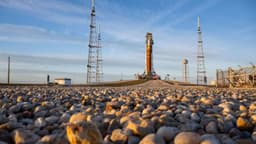
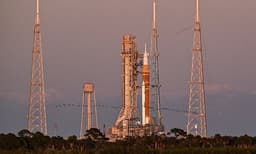
The Artemis II moon mission faces a setback, with its launch now targeted for March at the earliest due to an unresolved hydrogen fuel leak. This issue, which has troubled hydrogen rockets since the Apollo Era, resurfaced during a recent wet dress rehearsal for the Artemis II mission. Ground crews were unable to prevent liquid hydrogen from leaking from a component known as the 'tail service mast umbilical quick disconnect'.

This specific leak point is concerning as it is the exact same location that caused significant problems during the Artemis I mission three years prior. Those earlier leaks necessitated multiple removals of the rocket from the launchpad for repairs, ultimately delaying the Artemis I launch by six months. The recurrence of this issue has drawn criticism from space enthusiasts and the public, questioning NASA's progress in addressing fundamental hydrogen sealing challenges.

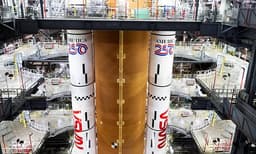
NASA officials explained that the complexity of the Space Launch System (SLS) rocket and limitations in ground testing scenarios contribute to the ongoing difficulties. John Honeycutt, Chair of the Artemis II Mission Management Team, admitted the leak 'caught us off guard,' while Lori Glaze, acting associate administrator, noted that lessons learned from Artemis I were implemented but challenges remain. Despite these hurdles, NASA maintains that the current leak can be rectified on the launchpad without requiring the rocket to be returned to the hangar, as was necessary for Artemis I.

While the exact timing of the next wet dress rehearsal is undetermined as data is being reviewed, the Artemis II mission is currently aiming for a launch window between March 6 and March 9, with a secondary window from March 11. If further delays occur, subsequent launch opportunities are available in April. Separately, the article touches on conspiracy theories regarding alleged alien discoveries during the Apollo 11 mission, though no evidence supports these claims.

Disclaimer: This story has been auto-aggregated and auto-summarised by a computer program. This story has not been edited or created by the Feedzop team.
The Artemis II moon mission was delayed to at least March due to a persistent hydrogen fuel leak that occurred during a critical wet dress rehearsal.
This is a nine-meter-tall component at the rocket's base that routes propellant lines and is the source of a recurring hydrogen leak issue, notably affecting both Artemis I and Artemis II missions.
NASA officials are confident that the current hydrogen leak issue can be fixed directly on the launchpad, unlike the extensive repairs required during the Artemis I mission.

Read more news on

Scienceside-arrowNASAside-arrow
trending

Nvidia share price drops sharply

trending

Anthropic AI triggers IT selloff

trending

India U19 World Cup final

trending

UGC NET December Result Soon

trending

GTA 6 release confirmed

trending

Raducanu recovers, wins quarter-final

trending

Nasdaq considers 'fast entry' rule

trending

Ronaldo trains with Al Nassr

trending

T20 World Cup 2026 details

You may also like

Artemis II: Humans Venture Beyond Earth Orbit

1 day ago • 6 reads

article image

NASA Moon Mission Delayed Again Amidst Conspiracy Frenzy

1 day ago • 7 reads

article image

Artemis II Launch: A Risky Step Towards Lunar Landing

2 Feb • 12 reads

article image

Artemis II: Moon Mission's Wildest Risks

31 Jan • 48 reads

article image

NASA's Moon Return: Artemis II Launch Days Away

14 Jan • 144 reads

article image