Home / Science / NASA's Moon Mission Stumbles on Familiar Hydrogen Issue
NASA's Moon Mission Stumbles on Familiar Hydrogen Issue
4 Feb
Summary
- Artemis II moon mission delayed to March due to hydrogen fuel leak.
- The leak occurred in the same component as the Artemis I mission.
- NASA faced backlash from enthusiasts over the recurring issue.

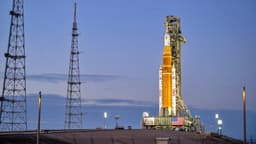
The Artemis II moon mission faces a setback, with its launch now targeted for March at the earliest due to an unresolved hydrogen fuel leak. This issue, which has troubled hydrogen rockets since the Apollo Era, resurfaced during a recent wet dress rehearsal for the Artemis II mission. Ground crews were unable to prevent liquid hydrogen from leaking from a component known as the 'tail service mast umbilical quick disconnect'.
This specific leak point is concerning as it is the exact same location that caused significant problems during the Artemis I mission three years prior. Those earlier leaks necessitated multiple removals of the rocket from the launchpad for repairs, ultimately delaying the Artemis I launch by six months. The recurrence of this issue has drawn criticism from space enthusiasts and the public, questioning NASA's progress in addressing fundamental hydrogen sealing challenges.
NASA officials explained that the complexity of the Space Launch System (SLS) rocket and limitations in ground testing scenarios contribute to the ongoing difficulties. John Honeycutt, Chair of the Artemis II Mission Management Team, admitted the leak 'caught us off guard,' while Lori Glaze, acting associate administrator, noted that lessons learned from Artemis I were implemented but challenges remain. Despite these hurdles, NASA maintains that the current leak can be rectified on the launchpad without requiring the rocket to be returned to the hangar, as was necessary for Artemis I.
While the exact timing of the next wet dress rehearsal is undetermined as data is being reviewed, the Artemis II mission is currently aiming for a launch window between March 6 and March 9, with a secondary window from March 11. If further delays occur, subsequent launch opportunities are available in April. Separately, the article touches on conspiracy theories regarding alleged alien discoveries during the Apollo 11 mission, though no evidence supports these claims.