

Home / Science / Artemis II Launches: Humanity's Bold Leap Back to the Moon
Artemis II Launches: Humanity's Bold Leap Back to the Moon
1 Apr
Summary
- Artemis II mission will see four astronauts orbit the Moon.
- New space race emerges between America, China, and private companies.
- Lunar water ice discovery fuels interest in Moon's south pole.
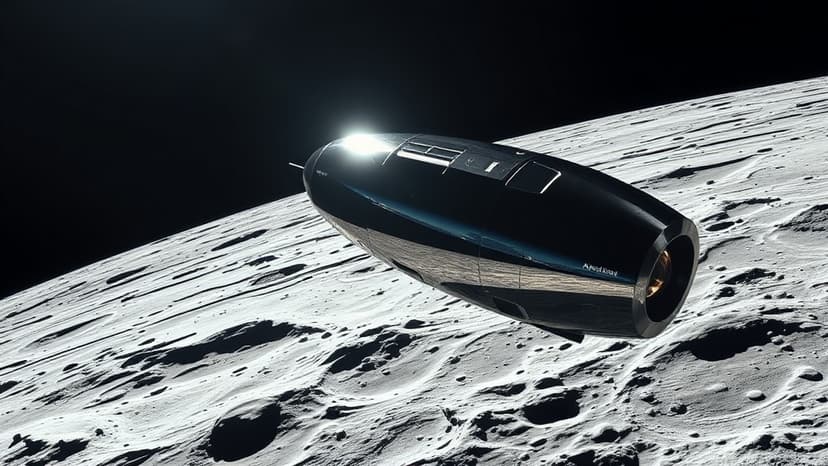
After a 50-year hiatus, human space exploration is experiencing a significant revival. NASA's Artemis II mission, with four astronauts set to orbit the Moon, marks a new dawn for space endeavors. This mission follows the uncrewed Artemis I orbit in 2022 and aims to return astronauts to the lunar surface by 2028. The launch, initially planned for February 2026, faced delays due to technical issues but is now poised for lift-off from Cape Canaveral, Florida.
The current resurgence is fueled by a new space race involving the United States, China, and private companies like SpaceX and Blue Origin. China's recent success with the Chang'e-6 mission, which brought back lunar soil samples from the Apollo Basin, has intensified competition. The discovery of water ice in the perpetually sunlit craters near the Moon's south pole is a key factor, offering potential resources for future human settlements.
Unlike the Cold War space race, this new era is driven by economic and security implications, including the potential for space mining and advancements in satellite technology. NASA prioritizes safety, a factor that may give China an edge due to its more authoritarian approach. The ultimate goal for many remains Mars, though the immense challenges of such a mission are still considerable.
