

Home / Science / Artemis II Astronauts Race Home: Mission Nears End
Artemis II Astronauts Race Home: Mission Nears End
10 Apr
Summary
- Artemis II astronauts ventured farther from Earth than ever before.
- Orion capsule will splashdown in the Pacific Ocean on April 11.
- Heat shield performance is crucial for the crew's safe return.
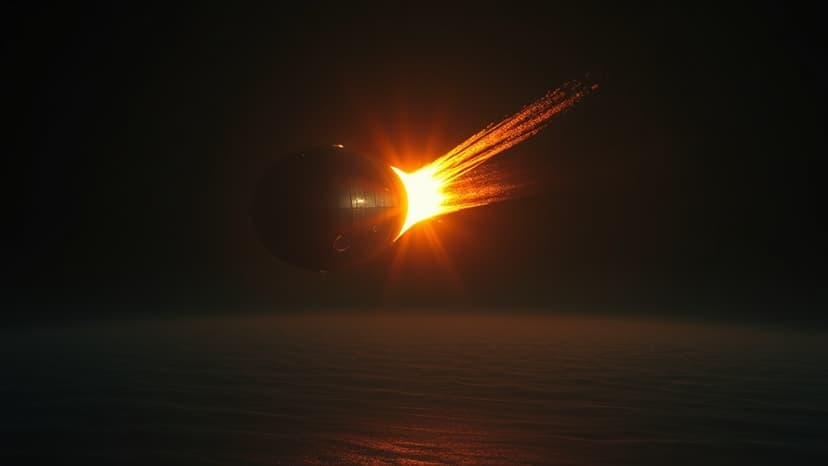
NASA's Artemis II mission is rapidly approaching its final, critical stage with the Orion spacecraft, Integrity, set for a high-speed return and splashdown. The crew, including astronauts Reid Wiseman, Victor Glover, Christina Koch, and Jeremy Hansen, have journeyed farther from Earth than any humans previously. Their safe return is scheduled for April 11, targeting the Pacific Ocean off the San Diego coast. This mission's conclusion is vital, as it rigorously tests the systems planned for future crewed lunar landings, including Artemis III.
Recovery operations will commence immediately following the splashdown, with helicopters transferring the crew to the amphibious ship USS John P Murtha. Stringent weather criteria, including wave height, wind speed, and visibility, must be met for a safe operation. The Orion capsule's re-entry will see it hit Earth's atmosphere at approximately 23,800 mph. About 42 minutes before splashdown, the service module separates, leaving the crew module to navigate the intense heat and deceleration, protected by its ablative heat shield.
A key focus for mission success is the performance of Orion's heat shield, which endures temperatures up to 2,700 degrees Celsius during re-entry. While the uncrewed Artemis I mission demonstrated the shield's capability, post-flight analysis revealed unexpected material loss. NASA has adjusted the re-entry profile to a steeper angle, aiming to reduce the duration of peak heating and enhance safety for the Artemis II crew. Communication blackouts are expected during re-entry, lasting three to six minutes as the superheated plasma envelops the spacecraft.
Following atmospheric re-entry and deceleration, a sequence of 11 parachutes will deploy, slowing the capsule to about 20 mph for a controlled splashdown. The astronauts will experience gravitational forces within human tolerance. Within two hours of landing, they will be medically assessed and transported back to NASA's Johnson Space Center. The crew has shared reflections on the profound experience, emphasizing the fragility of Earth and the importance of human unity, with their journey offering a unique perspective on our place in the universe.
