feedzop-word-mark-logo
searchLogin
Feedzop
homeFor YouIndiaIndia
You
bookmarksYour BookmarkshashtagYour Topics
Trending
Terms of UsePrivacy PolicyAboutJobsPartner With Us

© 2026 Advergame Technologies Pvt. Ltd. ("ATPL"). Gamezop ® & Quizzop ® are registered trademarks of ATPL.

Gamezop is a plug-and-play gaming platform that any app or website can integrate to bring casual gaming for its users. Gamezop also operates Quizzop, a quizzing platform, that digital products can add as a trivia section.

Over 5,000 products from more than 70 countries have integrated Gamezop and Quizzop. These include Amazon, Samsung Internet, Snap, Tata Play, AccuWeather, Paytm, Gulf News, and Branch.

Games and trivia increase user engagement significantly within all kinds of apps and websites, besides opening a new stream of advertising revenue. Gamezop and Quizzop take 30 minutes to integrate and can be used for free: both by the products integrating them and end users

Increase ad revenue and engagement on your app / website with games, quizzes, astrology, and cricket content. Visit: business.gamezop.com

Property Code: 5571

Home / Science / Argentina's Atenea Microsatellite Joins NASA Artemis II Mission

Argentina's Atenea Microsatellite Joins NASA Artemis II Mission

17 Jan

•

Summary

  • Argentine microsatellite Atenea will launch with NASA's Artemis II mission.
  • Atenea will reach a record distance of 70,000 km from Earth.
  • The satellite will measure radiation and test deep space communication.

Argentina's Atenea Microsatellite Joins NASA Artemis II Mission

An Argentine microsatellite named Atenea is scheduled to embark on a journey into space as part of NASA's upcoming Artemis II lunar mission. This significant undertaking highlights Argentina's growing capabilities in space technology and international collaboration.

The Atenea microsatellite, a product of joint development by Argentina's National Space Activities Commission, the company VENG, and participation from several esteemed Argentine scientific and academic institutions, is poised to achieve a new milestone. It will be deployed at an unprecedented distance of 70,000 kilometers from Earth, marking a record for Argentine-made satellites.

Once in orbit, Atenea will undertake critical scientific and technological tasks. Its mission includes measuring radiation levels in deep space, testing advanced components for future space applications, receiving GPS data for geostationary transfer orbits, and evaluating the performance of long-distance communication channels, furthering Argentina's contributions to space exploration.

trending

Djokovic chases 25th Grand Slam

trending

Prince Albert medical procedure

trending

Draymond Green texted draft targets

trending

Australian Open Sinner, Alcaraz Dominate

trending

India vs New Zealand decider

trending

India vs New Zealand decider

trending

Courtney Walsh joins Zimbabwe

trending

JioHotstar entertainment watch time grew

trending

Shadowfax Technologies IPO opens

trending

BCB requests group swap

Disclaimer: This story has been auto-aggregated and auto-summarised by a computer program. This story has not been edited or created by the Feedzop team.
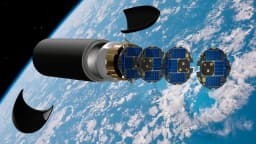
The Atenea microsatellite will be deployed from the Artemis II mission to conduct deep space measurements and test communication technologies.
The Atenea microsatellite will reach a record distance of 70,000 kilometers from Earth.
Atenea was developed by the National Space Activities Commission with contributions from VENG, the Argentine Institute of Radio Astronomy, and several universities.

Read more news on

Scienceside-arrowNASAside-arrow

You may also like

Astronaut Medevac: First Ever From Space Station

15 Jan • 42 reads

article image

Astronaut's Health Crisis Forces ISS Evacuation

9 Jan • 50 reads

article image

SpaceX Kicks Off 2026 With Italian Satellite Launch

3 Jan • 164 reads

article image

New 'Pizza-Sized' Satellites Launch for Space Tech Test

19 Dec, 2025 • 153 reads

article image

Billionaire Isaacman Takes Helm at NASA Amidst Global Race

18 Dec, 2025 • 177 reads

article image