

Home / Science / Arctic Methane Seeps: 5,000-Year Gas Emissions Fuel Warming
Arctic Methane Seeps: 5,000-Year Gas Emissions Fuel Warming
27 Mar
Summary
- Methane emissions in the Laptev Sea have continued for 5,000 years.
- Gas seeps from marine sediments and underlying rocks into the atmosphere.
- Carbonate minerals form where microbes oxidize methane, indicating past emissions.
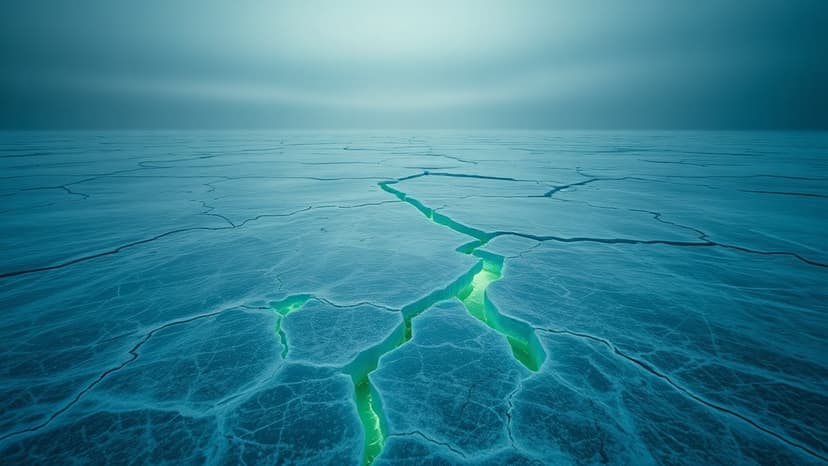
Scientists have determined that methane emissions in the Arctic's Laptev Sea have persisted for approximately 5,000 years, significantly impacting global warming. This natural phenomenon involves methane migrating from marine sediments and underlying rocks through various geological features and entering the atmosphere.
The research focused on sedimentary minerals, specifically authigenic carbonates, which form when microbes consume methane. These carbonates serve as indicators of past methane seeps, even after emissions cease. Scientists found these mineral deposits across the Barents, Laptev, and Chukchi Seas.
Studies in the Laptev Sea revealed recurring episodes of carbonate formation, dating back about 5,000 and 2,600 years on the outer shelf, and 2,700 and 2,100 years ago on the continental slope. Factors such as tectonic activity, permafrost degradation, and seismic events likely contribute to these intermittent methane releases.
