

Home / Science / Arctic Lakes Leak Greenhouse Gases
Arctic Lakes Leak Greenhouse Gases
23 Apr
Summary
- Small Arctic lakes release significant carbon dioxide and methane.
- Gas emissions increase in lakes that developed after permafrost melt.
- Residual lakes require inclusion in climate monitoring and models.
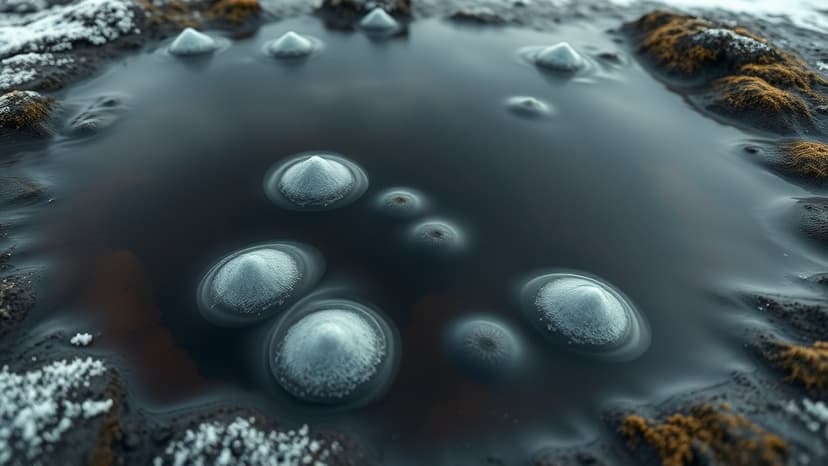
Soil scientists have identified residual lakes in the Russian Arctic's swampy plains as sources of greenhouse gases. These lakes, which form in depressions left by larger thermokarst lakes after permafrost melts, are releasing considerable amounts of carbon dioxide and methane. The study found that gas concentrations increased sequentially in lakes, correlating with their development stages after initial drainage.
Researchers observed that the flow of carbon dioxide from these shallow reservoirs is substantial and not directly tied to the time since drainage or permafrost coverage. However, dissolved gas concentrations rise with the lake's succession stage. This indicates a dynamic biogeochemical cycle within these environments, influenced by vegetation growth and nutrient availability.
Given the ongoing warming and disruption of the Arctic's hydrological patterns, the contribution of these residual basins to greenhouse gas emissions and landscape changes is expected to grow. Scientists are recommending their inclusion in monitoring systems and carbon cycle models to accurately assess the impact of permafrost melting on climate.
