Home / Science / Antarctica's Blood Falls: Red Mystery Solved
Antarctica's Blood Falls: Red Mystery Solved
24 Feb
Summary
- Blood Falls are colored by oxidized iron particles in nanospheres.
- Liquid water exists due to hypersaline brine, preventing freezing.
- Eruptions are caused by pressure variations from glacier movement.
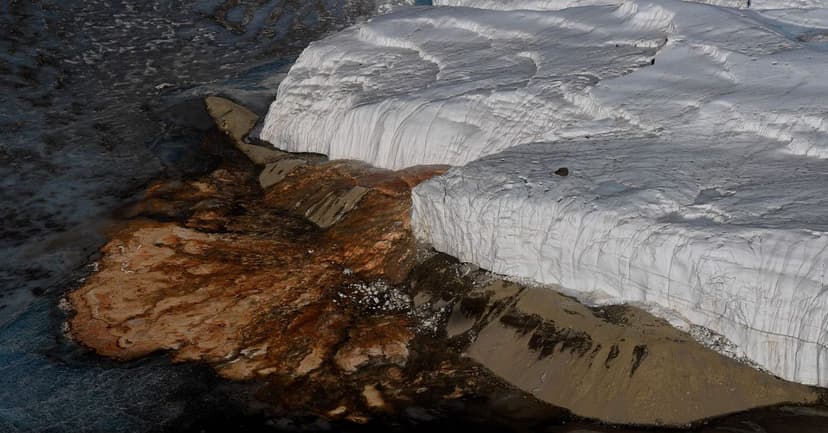
A mysterious crimson liquid periodically gushing from Antarctica's Taylor Glacier, known as Blood Falls, has had its core mysteries explained through recent scientific observations. Discovered in 1911, the startling red color is now attributed to iron particles trapped in nanospheres, which oxidize upon contact with air, producing a rust-like hue. The presence of liquid water at sub-zero temperatures is due to a hypersaline brine, a remnant from the receding Antarctic Ocean approximately two million years ago, whose high salt content prevents freezing.
Further research, utilizing GPS data and thermal sensors, has clarified the mechanics behind the periodic eruptions. Scientists determined that the Blood Falls are propelled by variations in pressure within the subglacial brine channels. As the Taylor Glacier moves, it compresses these channels, building significant pressure until the overlying ice yields. This release forces the pressurized brine through cracks, causing the observed bursts and, interestingly, temporarily slowing the glacier's advance.