feedzop-word-mark-logo
searchLogin
Feedzop
homeFor YouIndiaIndia
You
bookmarksYour BookmarkshashtagYour Topics
Trending
Terms of UsePrivacy PolicyAboutJobsPartner With Us

© 2026 Advergame Technologies Pvt. Ltd. ("ATPL"). Gamezop ® & Quizzop ® are registered trademarks of ATPL.

Gamezop is a plug-and-play gaming platform that any app or website can integrate to bring casual gaming for its users. Gamezop also operates Quizzop, a quizzing platform, that digital products can add as a trivia section.

Over 5,000 products from more than 70 countries have integrated Gamezop and Quizzop. These include Amazon, Samsung Internet, Snap, Tata Play, AccuWeather, Paytm, Gulf News, and Branch.

Games and trivia increase user engagement significantly within all kinds of apps and websites, besides opening a new stream of advertising revenue. Gamezop and Quizzop take 30 minutes to integrate and can be used for free: both by the products integrating them and end users

Increase ad revenue and engagement on your app / website with games, quizzes, astrology, and cricket content. Visit: business.gamezop.com

Property Code: 5571

Home / Science / Ancient Roman Medicine: Feces Was Key Ingredient

Ancient Roman Medicine: Feces Was Key Ingredient

11 Feb

•

Summary

  • Romans used fecal matter mixed with thyme and olive oil as medicine.
  • This discovery provides direct chemical evidence of Greco-Roman fecal medicine.
  • The find puts to rest doubts about the practical use of ancient fecal remedies.
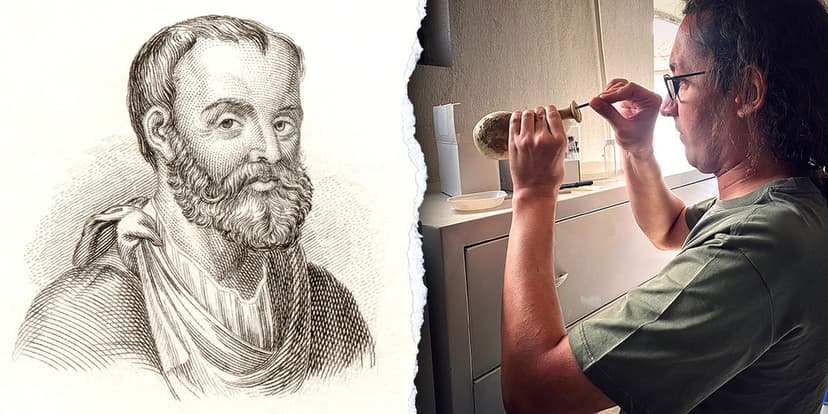
Ancient Roman Medicine: Feces Was Key Ingredient

Archaeologists have unearthed direct chemical evidence confirming the use of fecal matter in ancient Roman medical treatments. The discovery stems from a vessel found in Pergamon, an ancient Greek city now in Turkey, which researchers identified as containing human feces mixed with thyme and olive oil.

This finding, published in the Journal of Archaeological Sciences in April 2026, offers the first archaeological proof of a medicinal practice known from ancient texts. The mixture, intended for topical application, utilized thyme to mask the odor and leverage its antibacterial properties.

The residue was discovered in a vessel that appeared to be an unguentarium, typically used for perfumes, but repurposed as a medicine bottle. The research, conducted by Cenker Atila and colleagues, confirms a remedy described by the renowned physician Galen, ending debates about the actual practice of fecal-based medicine in antiquity.

trending

Salesforce lays off 1000

trending

India US trade tariffs slashed

trending

Margot Robbie's Wuthering Heights panned

trending

CBSE board exams: key details

trending

Jana Nayagan movie court case

trending

Dhakshineswar Suresh Davis Cup hero

trending

Deepika Padukone wears Gaurav Gupta

trending

NZ vs UAE match prediction

trending

iPhone 17 Croma Valentine's sale

Disclaimer: This story has been auto-aggregated and auto-summarised by a computer program. This story has not been edited or created by the Feedzop team.
Archaeologists found residue containing human feces mixed with thyme and olive oil in an ancient vessel from Pergamon.
This discovery provides the first direct archaeological and chemical evidence of fecal matter used in Greco-Roman medicine, confirming remedies described by Galen.
The fecal matter was mixed with thyme and olive oil, with thyme used to mask the smell and provide antibacterial benefits, likely for topical application.

Read more news on

Scienceside-arrow

You may also like

Plague's Human Toll Unearthed in Ancient Mass Grave

31 Jan • 4 reads

article image

Smithsonian Returns Looted Sculptures to India

28 Jan • 83 reads

article image

Goa's Ancient Konkani Inscription Found!

19 Jan • 121 reads

3,000-Year-Old Beer Found in China

21 Jan • 51 reads

article image

Gabriel Barkay: The Archaeologist Who Rewrote Bible History

17 Jan • 134 reads

article image