Home / Science / 165-million-year-old mammal shows chewing & suckling
165-million-year-old mammal shows chewing & suckling
8 Oct
Summary
- Fossil reveals early mammal capable of chewing food.
- Discovery shows ancient mammal was likely able to suckle.
- Fossil dates back to at least the middle Jurassic period.
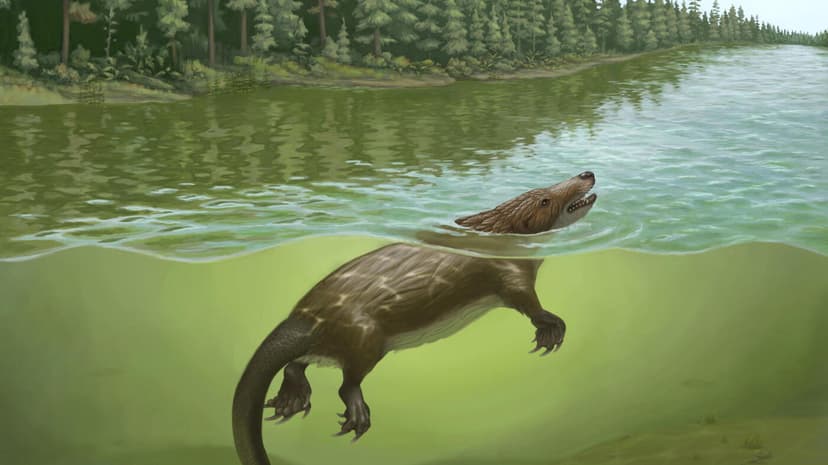
Paleontologists have unearthed a significant fossil in Inner Mongolia, China, belonging to an ancient mammal that lived approximately 165 million years ago. This discovery, described in the journal Nature, is rare and provides a detailed glimpse into early mammalian life.
The fossilized remains indicate the creature possessed the distinct mammalian abilities of chewing food before swallowing and suckling its young. These traits are fundamental to mammalian biology and their presence in a middle Jurassic specimen extends our understanding of when these characteristics first emerged.
Researchers utilized advanced techniques like X-ray fluorescence spectroscopy and CT scans to reconstruct the animal's features. The fossil suggests a semi-aquatic lifestyle, with a large tail for swimming and sharp teeth suited for a predatory diet, possibly including small salamanders.


