Home / Science / 40,000-Year-Old German Artifacts Show Script-Like Marks
40,000-Year-Old German Artifacts Show Script-Like Marks
24 Feb
Summary
- Ancient German artifacts bear script-like notches and dots.
- Marks show information density similar to early Mesopotamian script.
- The signs suggest advanced cognitive abilities of early Europeans.
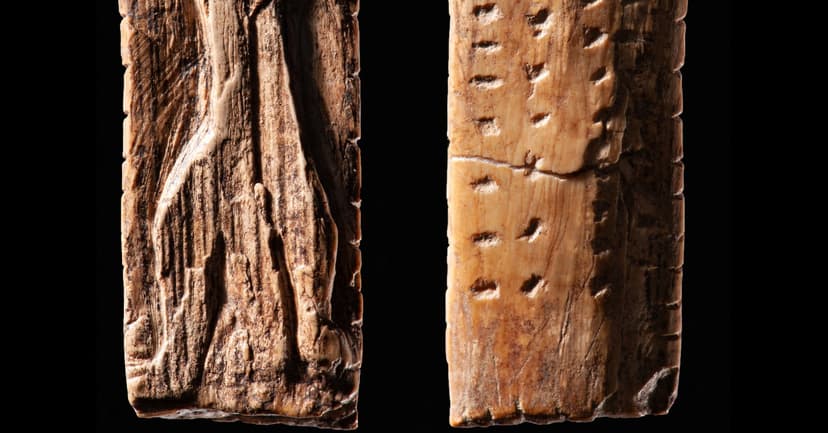
Newly analyzed artifacts from Germany, crafted around 40,000 years ago by early European people, display intriguing sequences of notches and dots. These marks, found on objects like the mammoth ivory Adorant figurine, are not considered a written language but share properties with early Mesopotamian scripts. The findings suggest remarkable cognitive abilities among the hunter-gatherer bands of the Aurignacian culture.
Researchers used computational analysis on over 200 Aurignacian artifacts, dating from about 43,000 to 34,000 years ago. They found that 'sign types,' such as crosses, were used selectively, appearing only on certain artifact types. This conventional use, passed down over generations, indicates the signs conveyed information beyond simple decoration.
While the Aurignacian signs differ from modern writing systems, their information density is comparable to proto-cuneiform from ancient Mesopotamia. This suggests a sophisticated system of symbolic communication existed among early modern humans in Europe, dating back to a time when they encountered Neanderthals after migrating from Africa.