Home / Science / Ancient Caesarea Reveals Pilate Stone, Christian History
Ancient Caesarea Reveals Pilate Stone, Christian History
4 Jan
Summary
- Archaeologists uncovered the ancient Roman city of Caesarea Maritima.
- The Pilate Stone provides direct archaeological proof of Pontius Pilate.
- Ruins support biblical accounts of early Christian events and figures.
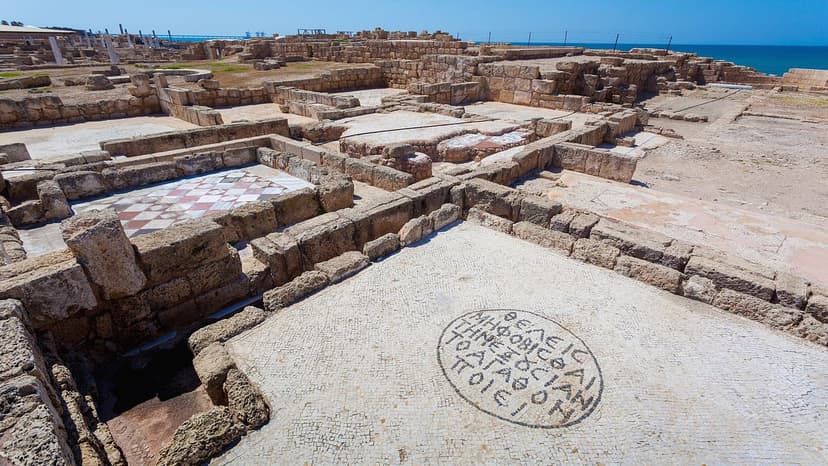
An ancient Roman city, identified as Caesarea Maritima, has been uncovered on Israel's coast, offering substantial archaeological evidence supporting biblical accounts. This grand port, constructed by King Herod between 22 and 10 BC, features a massive artificial harbor, aqueducts, a theater, and a stadium, all of which played a role in early Christian events.
The discovery of the Pilate Stone, an inscription naming Pontius Pilate as the Roman governor of Judea, provides the first direct archaeological confirmation of his historical existence. This artifact is crucial as Pilate presided over Jesus' trial, as detailed in the Gospels. The site, mentioned extensively in the Book of Acts, also yielded mosaics with early New Testament verses, potentially dating to the second century AD.
Caesarea Maritima was a significant center for Roman governance and early Christianity, reportedly where Peter baptized the first non-Jewish believer and where the Apostle Paul was imprisoned and tried. The extensive ruins continue to bridge Roman history with the New Testament narrative, attracting global visitors and scholars.


