

Home / Science / Ancient Baptism Ritual Rewritten?
Ancient Baptism Ritual Rewritten?
4 Apr
Summary
- Rare marble artifact found at ancient Hippos in Israel.
- Artifact suggests three-oil anointing in early Christian baptism.
- Discovery could force historians to rethink baptismal rites history.
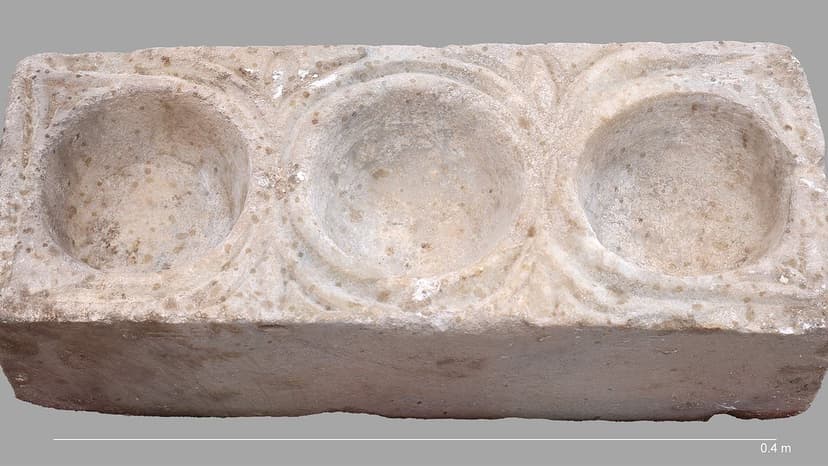
A remarkable marble artifact discovered in the ancient city of Hippos, Israel, may necessitate a revision of historical accounts of baptism. Excavations near the Sea of Galilee, a region central to Jesus' ministry, yielded this unique object with three hemispheric cavities, believed to have held different oils.
This find suggests a three-phase anointing ritual for baptism, a practice not clearly documented in existing sources. Traditional understanding involves anointing with two oils. The artifact, estimated to be around 1,300 years old, points to a lost stage in early Christian baptismal rites.
The discovery was made in a hall annexed to a cathedral in Hippos, which archaeologists consider the 'cradle of Christianity.' The hall contained a baptismal font, possibly for infants and children, with another font located in a larger hall, suggesting distinct uses for adult and child baptisms.
This rare glimpse into the shaping of baptismal rites during the Byzantine period offers insights into the diverse liturgical traditions that developed regionally. The hall's destruction by an earthquake in 749 AD helped preserve these ancient artifacts until their recent unearthing.
