Home / Science / Genetic Breakthrough Revives Forest Giant
Genetic Breakthrough Revives Forest Giant
13 Feb
Summary
- New study offers hope for American chestnut tree revival.
- Genetic testing speeds up breeding for disease resistance.
- Goal is resilient trees with American chestnut DNA.
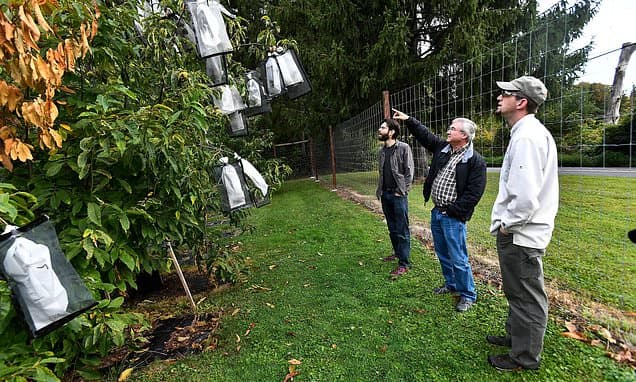
Billions of American chestnut trees once flourished across the eastern United States, but succumbed to blight and root rot by the 1950s. A recent study published in Science offers a promising path to their revitalization.
Researchers are employing genetic testing to pinpoint trees most likely to resist disease and grow tall. This method significantly shortens the generational gap, speeding the development of a resilient next generation.
The goal is to cultivate trees possessing the majestic stature of the American chestnut combined with the disease resistance of the Chinese chestnut. This complex trait has been difficult to achieve due to the scattered nature of desirable genes.
The study sequenced multiple chestnut genomes to identify genes associated with desired traits. This allows breeders to select for resilience while preserving a substantial amount of American chestnut DNA, estimated between 70% and 85%.
Genetic testing reveals the best offspring years earlier than natural observation, accelerating restoration efforts. This accelerated breeding process is crucial for re-establishing the American chestnut in its native range.
While some advocate for purely natural restoration, experts suggest that introducing genetic diversity from outside the traditional American chestnut pool is essential for long-term survival. The aim is to create tall, resilient trees capable of competing in Eastern forests once more.