
Home / Science / Algae Glows: Living Light for a Greener Future
Algae Glows: Living Light for a Greener Future
6 May
Summary
- Scientists induced sustained glowing in algae for up to 25 minutes.
- Algae were encapsulated in hydrogel and 3D-printed into shapes.
- This living light could power biosensors or reduce battery waste.
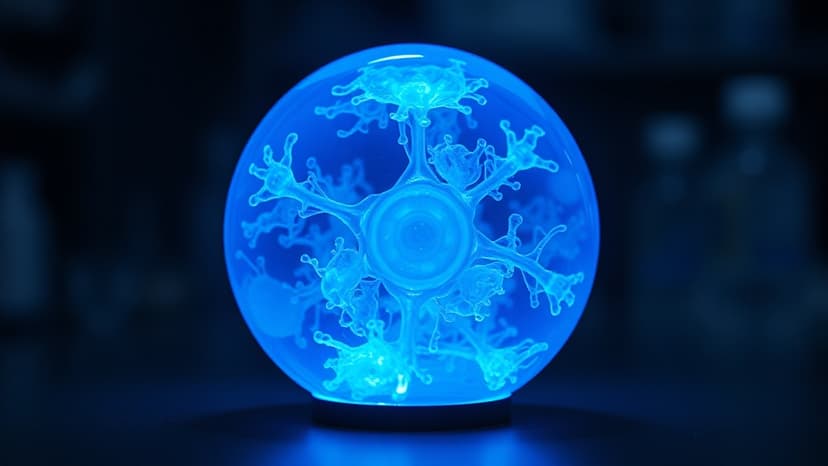
Researchers in the United States have developed a method to induce a sustained glow from a marine alga, Pyrocystis lunula. Previously known for brief flashes or sparkling displays in ocean waves, this single-celled organism's light-emitting capabilities have been extended for up to 25 minutes.
Scientists found that exposing the algae to an acidic solution triggered a more consistent bioluminescence. They then encapsulated the algae within a water-based hydrogel, allowing for the 3D printing of glowing shapes. These bio-integrated materials emit a strong cyan-blue light.
This 'living light' technology, derived from enzymes like luciferase, could potentially be used for applications such as glowing novelties or, more significantly, as biosensors that visually indicate the detection of toxins. The advancement also presents an opportunity to reduce waste from disposable batteries in small light-emitting devices.
While challenges remain in transitioning from laboratory conditions to real-world applications, this research marks a significant step. The exact evolutionary reason for algae's bioluminescence is still a mystery, with theories suggesting a defensive role against predators.
